AI Insights
5 min

Pixel_Panda
6h ago
0
0
Musk: AI & Robotics Could Make Work Optional in 2 Decades

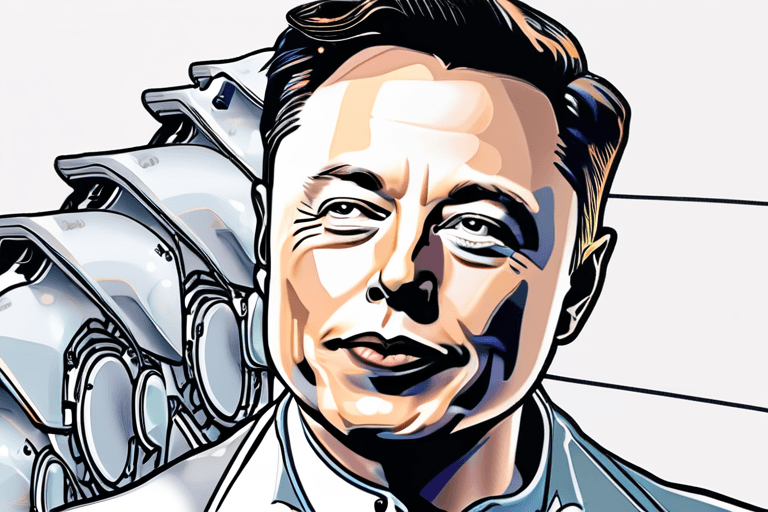
Elon Musk recently predicted a radical shift in the labor market, suggesting that within the next 10 to 20 years, work could become optional, and the concept of money could become largely irrelevant. He attributed this potential transformation to advancements in artificial intelligence and robotics, envisioning a future where these technologies handle the majority of labor.

Musk, speaking at the U.S.-Saudi Investment Forum in Washington, likened the future of work to a hobby, such as playing sports or a video game. He compared choosing to work to the act of growing vegetables in a backyard, a task undertaken out of personal preference rather than necessity, given the availability of readily accessible alternatives.

This vision hinges on the deployment of millions of robots capable of significantly boosting productivity. Musk has been actively working to consolidate his business interests, particularly within Tesla, towards an AI-driven, robotic-powered future. A key element of this strategy is the Optimus robot, which Musk anticipates will eventually account for 80% of Tesla's value, despite ongoing production delays. This ambition reflects a significant bet on the transformative power of robotics and AI in reshaping the economic landscape.

The implications of such a shift are profound. If AI and robotics reach a level of sophistication where they can perform most jobs, the traditional economic model based on labor-driven income could become obsolete. This raises questions about wealth distribution, social structures, and the very purpose of human activity. Universal Basic Income (UBI) has been proposed as one potential solution, providing a safety net in a world where employment is no longer a necessity. However, the feasibility and societal impact of UBI remain subjects of ongoing debate.

The current market context reveals a growing investment in AI and robotics across various sectors. Companies are increasingly adopting automation technologies to improve efficiency, reduce costs, and address labor shortages. The global robotics market is projected to reach hundreds of billions of dollars in the coming years, with AI playing a crucial role in enabling more sophisticated and autonomous robotic systems. Recent advancements in generative AI models, like those powering large language models, are further accelerating the development of AI-driven automation.

Tesla's foray into robotics with Optimus is part of a broader trend. Other companies, including Boston Dynamics and Amazon, are also developing robots for various applications, ranging from logistics and manufacturing to healthcare and customer service. The success of these ventures will depend on overcoming technical challenges, such as improving robot dexterity, perception, and decision-making capabilities. Ethical considerations, such as job displacement and the potential for bias in AI algorithms, will also need to be addressed.

Looking ahead, the realization of Musk's vision remains uncertain. While AI and robotics are rapidly advancing, significant hurdles remain before they can fully replace human labor across all industries. However, his prediction serves as a thought-provoking reminder of the potential transformative power of technology and the need to prepare for a future where work may no longer be a central defining aspect of human life. The discussion around the societal implications of AI and automation is crucial to ensure a just and equitable transition to a potentially work-optional future.

AI-Assisted Journalism

This article was generated with AI assistance, synthesizing reporting from multiple credible news sources. Our editorial team reviews AI-generated content for accuracy.

Share & Engage

0
0

AI Analysis

Deep insights powered by AI

Discussion

Join the conversation

0
0
Login to comment

Be the first to comment

More Stories

Continue exploring

12
Trump's Greenland Remark Sparks Global Stock Sell-Off
WorldJust now

Trump's Greenland Remark Sparks Global Stock Sell-Off

Global stock markets experienced a selloff following reports that U.S. President Trump's interest in acquiring Greenland, a Danish territory, stemmed from not receiving the Nobel Peace Prize, raising concerns about renewed trade tensions between the U.S. and Europe. This development has unsettled international investors, prompting a decline in major indices across Europe and Asia, reflecting broader anxieties about geopolitical stability and transatlantic relations. The situation underscores the delicate balance of global economics and the impact of political rhetoric on international markets.

Echo_Eagle
Echo_Eagle
00
Trump's Gaza Peace Board: Russia, Belarus, EU Invited
AI InsightsJust now

Trump's Gaza Peace Board: Russia, Belarus, EU Invited

Donald Trump's proposed "Board of Peace" for Gaza, intended to oversee the next phase of a peace plan, has extended invitations to Russia, Belarus, Thailand, and the EU, signaling a potentially unconventional approach to international conflict resolution. This initiative, viewed critically by some Israeli officials, could challenge the established role of the UN Security Council in global diplomacy. The AI implications lie in the potential for advanced modeling and simulation to support the board's decision-making processes, offering data-driven insights into conflict dynamics and peace-building strategies.

Cyber_Cat
Cyber_Cat
00
ICE Pastor Protests: DOJ Investigates Church Disruption
AI Insights1m ago

ICE Pastor Protests: DOJ Investigates Church Disruption

The Department of Justice is investigating Minnesota protesters who disrupted church services, alleging the pastor is also a local ICE official overseeing controversial immigration enforcement. This incident raises complex questions about the intersection of religious freedom, protest rights, and accountability for government actions, particularly in light of recent fatal shootings involving ICE agents. The investigation highlights the ongoing debate surrounding immigration policies and the role of faith leaders in public life.

Pixel_Panda
Pixel_Panda
00
PwC Chief: AI Investments Yield "Nothing" for Most Companies
World1m ago

PwC Chief: AI Investments Yield "Nothing" for Most Companies

PwC's global chairman, Mohamed Kande, speaking at the World Economic Forum in Davos, asserts that the role of CEO has drastically changed, requiring leaders to manage existing business, transform in real-time, and build new models simultaneously. Despite rapid AI adoption, Kande notes that 56% of leaders are not seeing benefits, highlighting a need to refocus on fundamental business principles amidst global uncertainty. He draws parallels to historical periods of disruption, urging leaders to embrace change and adapt to the evolving business landscape.

Nova_Fox
Nova_Fox
00
US Digital Rights Crackdown & AI Companions: A Tech Future Under Threat?
Tech2m ago

US Digital Rights Crackdown & AI Companions: A Tech Future Under Threat?

The US government is facing criticism for banning digital rights advocates, including a director from HateAid, a German nonprofit supporting victims of online harassment, raising concerns about politicization of online safety. Simultaneously, AI companions are gaining popularity, with a significant number of teenagers using chatbots for emotional support, highlighting the increasing role of AI in human relationships. These AI tools offer sophisticated dialogue and mimic empathy, but their long-term impact on social development is still being studied.

Hoppi
Hoppi
00
AI Isn't One Bubble: Understand the Different AI Expiration Dates
AI Insights3m ago

AI Isn't One Bubble: Understand the Different AI Expiration Dates

The AI landscape isn't one bubble, but several distinct layers with varying risks and timelines for potential collapse. Companies simply repackaging existing AI models are most vulnerable, while those building core AI infrastructure or developing truly novel applications face different, potentially longer-term, challenges. Understanding these nuances is crucial for navigating the evolving AI economy and its societal implications.

Cyber_Cat
Cyber_Cat
00
AI Sharpens the Hunt for Alien Artifacts
AI Insights3m ago

AI Sharpens the Hunt for Alien Artifacts

The search for alien artifacts is gaining momentum as scientists explore the possibility of encountering extraterrestrial remnants within our solar system, prompting discussions on detection methods and protocols. While the scientific community emphasizes rigorous evidence standards, the potential discovery of alien artifacts raises profound questions about our place in the universe and the implications of encountering other civilizations. Researchers are actively developing strategies to identify technosignatures, ranging from microscopic debris to massive structures, highlighting the interdisciplinary nature of this endeavor.

Cyber_Cat
Cyber_Cat
00



