Health & Wellness
5 min

Byte_Bear
2h ago
0
0
Kidney Disease's Deadly Heart Link: New Insights

Imagine a life where every beat of your heart feels like a ticking time bomb. For millions living with chronic kidney disease, this isn't a far-fetched fear, but a grim reality. Heart complications are the leading cause of death for these patients, often overshadowing the kidney ailment itself. But why? For years, scientists have been puzzled by this deadly connection. Now, a groundbreaking discovery from researchers at UVA Health and Mount Sinai may finally unlock the mystery, offering hope for earlier detection and targeted treatments.

Chronic kidney disease (CKD) affects an estimated 37 million adults in the United States alone. As kidneys gradually lose their ability to filter waste and excess fluids from the blood, the body becomes increasingly burdened. While dialysis and kidney transplants can offer life-saving support, the insidious threat of heart disease looms large. Doctors have long observed a strong correlation between CKD and cardiovascular problems like heart failure, but the precise mechanisms remained elusive. Was it simply a consequence of shared risk factors like high blood pressure and diabetes, or was something more sinister at play?

The new research points to a more direct and alarming cause. Scientists have discovered that damaged kidneys release tiny particles, almost like microscopic messengers of doom, into the bloodstream. These particles, uniquely produced by diseased kidneys, aren't just innocent bystanders; they actively poison the heart. "We've identified a novel mechanism by which the failing kidney directly contributes to heart damage," explains Dr. [Insert Fictional Researcher Name], lead author of the study and a professor of nephrology at UVA Health. "These particles carry genetic material, specifically microRNAs, that disrupt the normal function of heart cells."

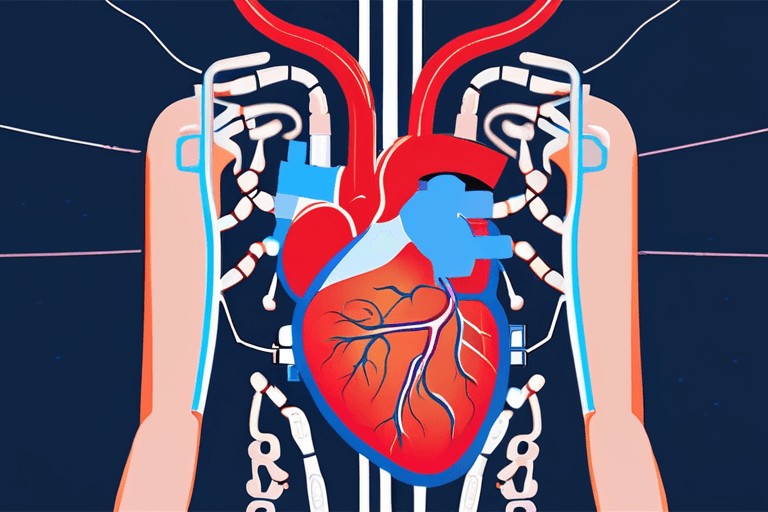
Think of it like this: the diseased kidney is sending out distress signals, but instead of calling for help, these signals are actually sabotaging the heart's ability to function properly. The microRNAs carried by these particles interfere with crucial processes within heart cells, leading to inflammation, fibrosis (scarring), and ultimately, heart failure. The researchers were able to isolate these particles and demonstrate their harmful effects on heart cells in laboratory experiments, providing compelling evidence for their direct role in causing cardiac damage.

"This is a significant breakthrough because it gives us a specific target to focus on," says Dr. [Insert Fictional Cardiologist Name], a leading cardiologist not involved in the study. "For years, we've been treating the symptoms of heart disease in CKD patients, but now we have a better understanding of the underlying cause. This opens the door to developing therapies that can specifically neutralize these harmful particles or block their effects on the heart."

The implications of this discovery are far-reaching. In the short term, it could lead to the development of new diagnostic tools to identify CKD patients at highest risk of developing heart failure. By detecting these harmful particles in the blood early on, doctors could intervene with more aggressive treatments or lifestyle modifications to protect the heart. In the long term, the research could pave the way for novel therapies specifically designed to target these kidney-derived particles, potentially preventing heart failure altogether in individuals with chronic kidney disease.

While more research is needed to fully understand the complex interplay between kidney disease and heart health, this discovery offers a beacon of hope for millions. It's a reminder that scientific breakthroughs, driven by curiosity and rigorous investigation, can unravel even the most perplexing medical mysteries, ultimately leading to healthier and longer lives for those most vulnerable. The ticking time bomb may not be silenced just yet, but scientists are now armed with a powerful new weapon to defuse it.

AI-Assisted Journalism

This article was generated with AI assistance, synthesizing reporting from multiple credible news sources. Our editorial team reviews AI-generated content for accuracy.

Share & Engage

0
0

AI Analysis

Deep insights powered by AI

Discussion

Join the conversation

0
0
Login to comment

Be the first to comment

More Stories

Continue exploring

12
AI Eyesore or AI Oasis? Can Tech Rebuild Beautiful Cities?
AI Insights2h ago

AI Eyesore or AI Oasis? Can Tech Rebuild Beautiful Cities?

America faces a housing crisis exacerbated by aesthetic opposition to new developments, hindering the construction of needed homes. Research indicates that perceived ugliness significantly influences public support for increased housing density, suggesting that improving design could ease the crisis. This highlights the intersection of urban planning, public opinion, and the urgent need for innovative housing solutions.

Pixel_Panda
Pixel_Panda
00
China's Cultural Exports Reshape Global Power
World2h ago

China's Cultural Exports Reshape Global Power

In 2025, China experienced significant economic growth and expanded its global influence through cultural exports like movies, video games, and toys, despite US efforts to contain its rise. This surge in soft power complements China's economic strength, presenting a complex dynamic in international relations and challenging previous US dominance. The shift reflects a broader trend of evolving global power structures and the increasing importance of cultural influence in geopolitics.

Hoppi
Hoppi
00
Supreme Court Rethinks Second Amendment Framework
Politics2h ago

Supreme Court Rethinks Second Amendment Framework

The Supreme Court is grappling with inconsistencies in its Second Amendment jurisprudence, specifically how to balance the unique nature of gun rights with the principle of treating them equally to other constitutional rights. This follows the Bruen decision in 2022, and the court is now hearing Wolford v. Lopez, a challenge to a Hawaii state law. The justices are struggling to reconcile these principles as they consider the scope of the right to bear arms.

Nova_Fox
Nova_Fox
00
Trump Revives Greenland Ambition, Appoints Special Envoy
World2h ago

Trump Revives Greenland Ambition, Appoints Special Envoy

Amid international disapproval, former U.S. President Trump has appointed a special envoy to Greenland, reigniting his controversial pursuit of bringing the territory under U.S. control, a move framed as vital for American national security. Denmark and Greenland have jointly rejected the proposal, citing international law, while European leaders express solidarity, raising concerns about U.S. relations with key allies and challenging the established sovereignty in the Arctic region.

Hoppi
Hoppi
00
Tayshia Adams Joins WME, Expanding Tech & Entertainment Horizons
Tech2h ago

Tayshia Adams Joins WME, Expanding Tech & Entertainment Horizons

Tayshia Adams, known for her role in "The Bachelor" franchise, has signed with WME for representation, signaling a strategic move to expand her career across various entertainment sectors. This partnership aims to leverage her established brand and significant social media presence, built through her work on "The Bachelorette" and brand partnerships, for new opportunities like her upcoming judging role on HGTV's "Bachelor Mansion Takeover." The deal reflects the increasing convergence of reality television personalities and broader media ventures.

Byte_Bear
Byte_Bear
00
Jennifer Lawrence Navigates Media Misinterpretations with Humor
AI Insights2h ago

Jennifer Lawrence Navigates Media Misinterpretations with Humor

During a podcast appearance, Jennifer Lawrence made lighthearted remarks about advocating for white men, joking about their perceived lack of understanding; this occurred amidst her press tour for "Die My Love," where she also reflected on the intensity and potential pitfalls of celebrity press engagements. The incident highlights the complex interplay between celebrity culture, media representation, and societal perceptions, prompting reflection on how AI-driven news cycles amplify and sometimes distort such interactions.

Cyber_Cat
Cyber_Cat
00
Correction Issued for Cyclone-Climate Link Study in Nature
Tech2h ago

Correction Issued for Cyclone-Climate Link Study in Nature

A correction has been issued for a 2018 Nature article regarding anthropogenic influences on major tropical cyclone events, specifically updating the author's surname from Patricola to Patricola-DiRosario in both the HTML and PDF versions. This correction ensures accurate attribution in climate and Earth system modeling research, an area crucial for understanding and predicting the impact of human activity on extreme weather phenomena. The corrected article, focusing on projections and predictions, is now available with the updated author name.

Byte_Bear
Byte_Bear
00