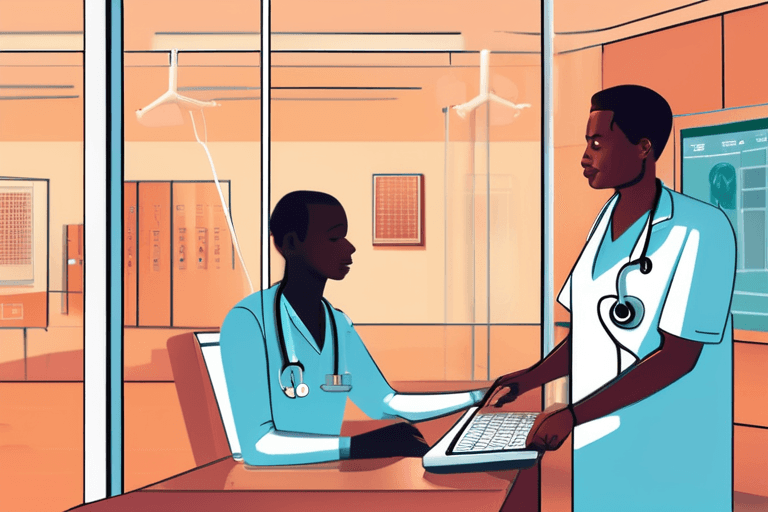
The Gates Foundation and OpenAI are investing $50 million in a new initiative, Horizon1000, aimed at revolutionizing healthcare in Sub-Saharan Africa through the integration of artificial intelligence. The partnership seeks to address the global health equity gap by equipping 1,000 primary healthcare clinics with AI tools by 2028.
The $50 million commitment encompasses funding, technology, and technical support. The initiative plans to begin its operations in Rwanda, collaborating directly with African leaders to spearhead the deployment of AI in healthcare settings. The goal is to ensure that communities in developing regions gain timely access to cutting-edge technologies, rather than facing the typical decades-long delay.
This investment arrives as the AI in healthcare market is experiencing rapid growth. According to a recent report by Grand View Research, the global AI in healthcare market was valued at $14.6 billion in 2022 and is projected to reach $102.7 billion by 2030, growing at a compound annual growth rate (CAGR) of 28.3% from 2023 to 2030. This growth is driven by the increasing volume of healthcare data, the need to improve patient outcomes, and the rising demand for personalized medicine. Horizon1000 aims to capitalize on this trend by applying AI to diagnostics, treatment planning, and preventative care in resource-constrained settings.
The Gates Foundation has a long history of investing in global health initiatives, focusing on eradicating diseases and improving healthcare access in developing countries. OpenAI, a leading AI research and deployment company, brings its expertise in developing and scaling AI technologies. Their collaboration signifies a strategic alignment between philanthropic goals and technological innovation.
Looking ahead, the success of Horizon1000 could pave the way for wider adoption of AI in healthcare across Africa and other developing regions. The initiative's focus on primary healthcare clinics is particularly significant, as these facilities often serve as the first point of contact for patients. By equipping these clinics with AI tools, Horizon1000 has the potential to improve early detection of diseases, optimize treatment plans, and ultimately improve health outcomes for millions of people. The project's progress in Rwanda will be closely watched as a model for future AI deployments in similar settings.




















Discussion
Join the conversation
Be the first to comment