Beneath a cloak of darkness, 25 miles off the Queensland coast, a veteran marine scientist named Peter Harrison inhaled deeply. "It's really coming through now," he declared, his flashlight beam cutting through the inky water. The "it" he referred to wasn't a rogue wave or a lurking predator, but something far more hopeful: the unmistakable scent of coral spawning. This annual underwater ballet, a synchronized release of eggs and sperm, is the Great Barrier Reef's way of renewing itself. But in an era of unprecedented environmental change, even this ancient ritual is under threat, prompting a massive, multifaceted rescue effort.
Australia is pouring billions of dollars into protecting its most iconic ecosystem. From innovative coral nurseries to robotic starfish killers, scientists and policymakers are deploying a dazzling array of technologies to bolster the reef's resilience. Yet, a growing chorus of voices argues that these efforts, while commendable, are akin to rearranging deck chairs on the Titanic. The fundamental problem, they say, is the elephant in the room: climate change.
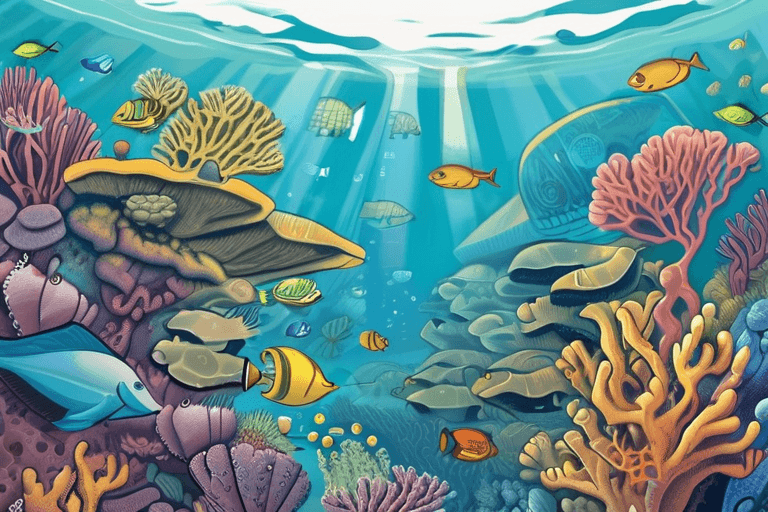
The Great Barrier Reef, a UNESCO World Heritage site stretching over 1,400 miles, is the world's largest coral reef system. It supports a staggering diversity of marine life, from vibrant coral gardens to majestic whales. But rising ocean temperatures, driven by greenhouse gas emissions, are causing widespread coral bleaching events. Bleaching occurs when corals, stressed by heat, expel the symbiotic algae that give them color and energy. If the stress is prolonged, the corals starve and die, transforming vibrant reefs into ghostly graveyards.
The Australian government's Reef 2050 Plan outlines a comprehensive strategy for protecting the reef. This includes initiatives to improve water quality, control crown-of-thorns starfish outbreaks, and restore damaged coral habitats. One particularly ambitious project is the Reef Restoration and Adaptation Program (RRAP), a collaborative effort involving scientists from across the country. RRAP is exploring a range of interventions, including coral gardening, cloud brightening (spraying seawater into the air to create clouds that reflect sunlight), and even genetic engineering to create more heat-resistant corals.
Sara Godinez-Espinosa, a research technician with RRAP, spends her days nurturing coral colonies in the National Sea Simulator, a state-of-the-art facility near Townsville. "We're trying to give the reef a fighting chance," she explains, carefully transferring Acropora kenti corals into a holding bin. These corals, grown from fragments collected on the reef, will eventually be transplanted back into degraded areas.
But many scientists believe that these interventions, while valuable, are ultimately Band-Aids on a gaping wound. "We're fiddling at the margins while the core problem continues to escalate," says Professor Ove Hoegh-Guldberg, a marine biologist at the University of Queensland and a leading expert on coral bleaching. "Unless we drastically reduce greenhouse gas emissions, we're simply delaying the inevitable."
The challenge lies in the scale of the problem. The Great Barrier Reef is a vast and complex ecosystem, and the impacts of climate change are pervasive. Even the most ambitious restoration efforts can only address a small fraction of the affected area. Moreover, the underlying drivers of climate change – the burning of fossil fuels, deforestation, and unsustainable land use practices – are global in nature, requiring international cooperation to address effectively.
The Australian government has committed to reducing its emissions, but critics argue that its targets are not ambitious enough to protect the reef. The country remains heavily reliant on coal, and its policies on renewable energy have been inconsistent. Furthermore, Australia's diplomatic efforts to persuade other countries to take stronger climate action have been limited.
The future of the Great Barrier Reef hangs in the balance. While technological innovations offer a glimmer of hope, the ultimate fate of this natural wonder depends on our collective willingness to confront the climate crisis. As Peter Harrison witnessed that night off the Queensland coast, the reef is still trying to renew itself. But it needs our help – not just with technological fixes, but with the fundamental shift in our relationship with the planet that is required to secure its survival.



















Discussion
Join the conversation
Be the first to comment