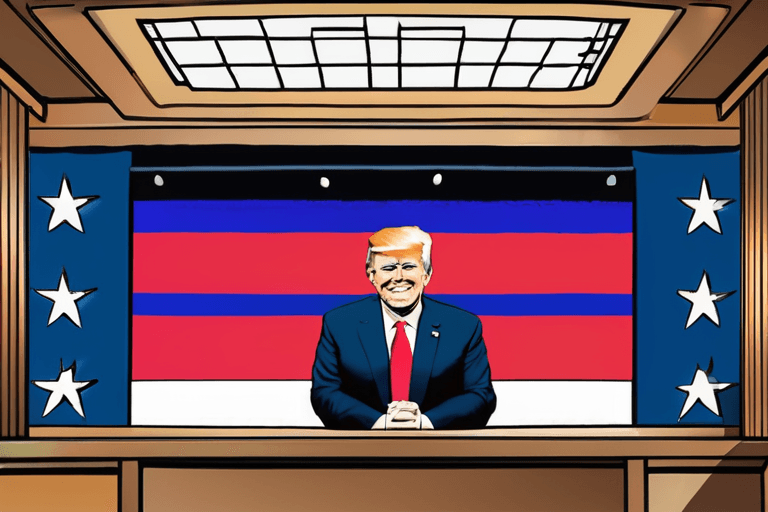
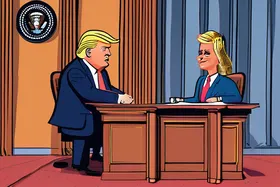
Lights, camera, potential political pandemonium! Imagine a world where Stephen Colbert has to share his desk with Marjorie Taylor Greene, or Jimmy Fallon swaps jokes with, say, a cardboard cutout of a Republican candidate because, well, equal time. That bizarre scenario might be closer than you think, thanks to a recent move by the FCC that has late-night hosts reaching for their antacid.
The FCC, currently helmed by Brendan Carr, a known Trump supporter, has issued a warning shot across the bows of late-night and daytime talk shows. They're revisiting the "equal-time rule," a regulation that mandates broadcast stations provide equivalent airtime to opposing political candidates. For decades, these shows have largely operated under an exemption, allowing them to poke fun at politicians of all stripes without triggering a fairness doctrine frenzy. But now, that exemption is under threat, potentially turning comedy stages into political battlegrounds.
The implications are vast and, frankly, a little absurd. Could a throwaway joke about a Republican candidate necessitate an on-air apology and a primetime interview with said candidate? Industry insiders are buzzing, with some whispering about a chilling effect on political satire. "The beauty of late-night is its ability to hold power accountable through humor," says media analyst Sarah Chen. "If hosts are constantly looking over their shoulders, worried about triggering the equal-time rule, that critical voice could be stifled."
This isn't the first time Carr has taken aim at perceived liberal bias in the entertainment world. He previously pressured ABC to consider suspending Jimmy Kimmel and even hinted at applying the equal-time rule to "The View," a daytime talk show known for its lively political debates. Critics see this latest move as part of a broader Trump-era campaign to muzzle dissenting voices on broadcast television. The FCC's public notice states that broadcast television stations, given access to valuable public resources, shouldn't unfairly favor one political candidate over another. But many see this as a thinly veiled attempt to pressure shows into giving more airtime to Republican candidates, regardless of their newsworthiness or comedic value.
The cultural impact could be significant. Late-night shows have become a vital source of political commentary for many viewers, particularly younger audiences. A shift towards bland, politically neutral content could alienate these viewers and further erode trust in traditional media. "People tune in to these shows for authenticity and sharp wit," says Chen. "If that's replaced with sanitized political messaging, they'll simply tune out."
The question now is, how will late-night hosts respond? Will they tone down their political commentary, invite more Republican guests, or simply ignore the FCC's warning and risk potential fines? One thing is certain: the future of late-night comedy, and its role in the political landscape, is hanging in the balance. Get ready for a potentially less funny, and definitely more complicated, election season.















Discussion
Join the conversation
Be the first to comment