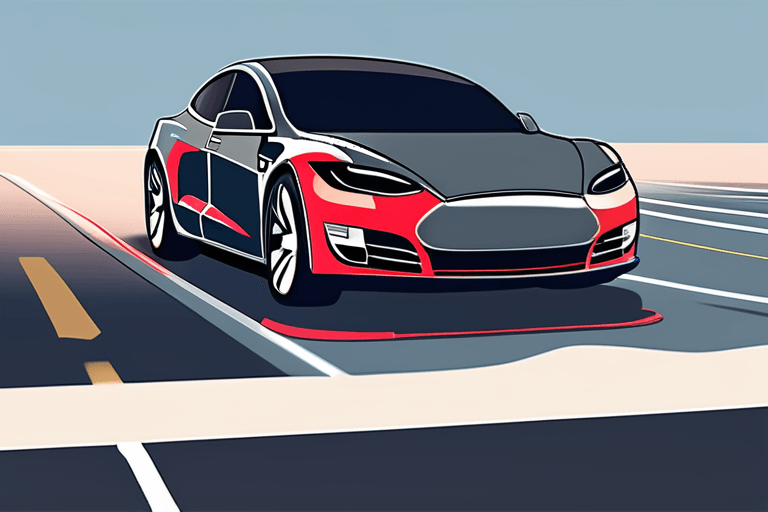
Elon Musk tempered expectations this week regarding the rollout of Tesla's Cybercab robotaxis and Optimus humanoid robots, signaling a potentially protracted path to mass production. The announcement raises questions about Tesla's ambitious diversification strategy and its reliance on AI and automation for future growth.
Musk's comments, made in response to a post highlighting the impending start of Cybercab production, emphasized the inherent challenges in scaling production for products with a high degree of innovation. He specifically noted that the initial production phase would be "agonizingly slow," following an S-curve pattern typical of new product launches. The speed of production ramp-up, he explained, is inversely proportional to the number of new parts and manufacturing steps involved. Given that the Cybercab and Optimus projects rely heavily on novel technologies and components, the company anticipates a slower-than-anticipated ramp.
While Musk did not provide specific financial projections for the Cybercab or Optimus programs, the delay could impact Tesla's revenue forecasts and capital expenditure plans. Investors have been closely watching these initiatives as potential catalysts for future growth beyond Tesla's core electric vehicle business. Any significant delay could lead to a reassessment of Tesla's valuation and its ability to compete in the rapidly evolving robotics and autonomous vehicle markets.
The market for both robotaxis and humanoid robots is still nascent but holds immense potential. Companies like Waymo and Cruise are already testing robotaxi services in limited areas, while other firms are developing robots for various industrial and consumer applications. Tesla's entry into these markets is seen as a significant development, given its expertise in electric vehicles, battery technology, and artificial intelligence. However, the company faces intense competition and regulatory hurdles in both sectors.
Tesla has been investing heavily in AI and robotics research and development in recent years, positioning itself as a leader in these emerging fields. The Optimus robot, for example, is designed to perform a wide range of tasks, from factory work to household chores. The Cybercab, on the other hand, aims to revolutionize transportation by providing fully autonomous ride-hailing services. These projects represent a significant departure from Tesla's traditional focus on electric vehicles, but Musk believes they are essential for the company's long-term success.
Looking ahead, Tesla's ability to overcome the production challenges associated with the Cybercab and Optimus projects will be crucial in determining its future trajectory. While Musk acknowledges the potential for a slow start, he remains optimistic about the long-term prospects for these initiatives. The company plans to leverage its expertise in AI, manufacturing, and software to accelerate the production ramp-up and bring these innovative products to market. However, investors will be closely monitoring Tesla's progress and holding the company accountable for delivering on its ambitious promises.














Discussion
Join the conversation
Be the first to comment