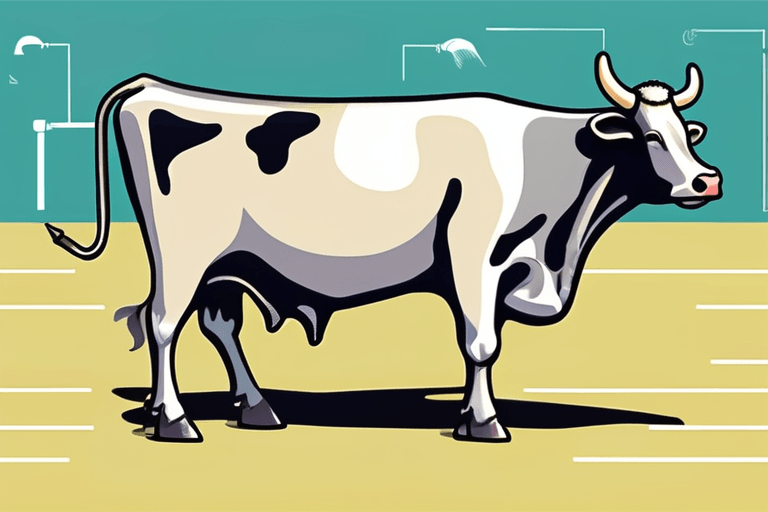
Veronika, a seemingly ordinary pet cow, is rewriting the bovine playbook. Forget docile grazing; Veronika wields tools. A broom, a stick – anything she can get her hooves on becomes an instrument for satisfying that persistent itch. This seemingly simple act, documented in a recent Current Biology report, marks the first recorded instance of flexible tool use in cattle, opening a fascinating window into the cognitive capabilities of these often-underestimated animals.
For centuries, cattle have been viewed primarily through the lens of agriculture, their intelligence largely dismissed. But Veronika's behavior challenges this perception, forcing scientists to reconsider the cognitive complexity of Bos taurus. Tool use, once considered a hallmark of human intelligence, has been observed in various species, from primates to birds. Now, it seems, we can add cattle to that list. This discovery isn't just about a cow scratching an itch; it's about understanding the potential for problem-solving and adaptability within a species we thought we knew.
The story of Veronika began with observations by Antonio J. Osuna-Mascaró and Alice M. I. Auersperg, researchers fascinated by animal cognition. They noticed Veronika consistently using objects to reach areas she couldn't access with her own body. This wasn't a one-off accident; it was a deliberate and repeated behavior. Veronika would strategically position herself, select a suitable tool, and then use it with surprising dexterity to scratch her back, flanks, or even her head. The researchers meticulously documented these instances, confirming that Veronika wasn't simply interacting with the objects randomly but using them with a clear purpose in mind.
"This observation is significant because it demonstrates a level of cognitive flexibility previously unacknowledged in cattle," explains Dr. Anya Sharma, a cognitive ethologist specializing in ungulate behavior. "It suggests that cattle possess a greater capacity for learning and problem-solving than we previously gave them credit for. This has implications for how we understand their welfare needs and how we manage them in agricultural settings."
The implications extend beyond animal welfare. Veronika's tool use raises questions about the underlying neural mechanisms driving this behavior. Are there specific brain regions in cattle that are activated during tool use? Could this behavior be learned through observation, or is it an innate ability that is triggered by environmental factors? These are questions that researchers are now eager to explore, potentially using AI-powered image analysis to track Veronika's movements and brain activity during tool use. Machine learning algorithms could be trained to identify patterns in her behavior that might be invisible to the human eye, providing deeper insights into the cognitive processes involved.
Furthermore, understanding the genetic basis of this behavior could have implications for breeding programs. Could selective breeding enhance cognitive abilities in cattle, leading to more adaptable and resilient livestock? This raises ethical considerations, of course, as we must ensure that any attempts to enhance cognitive abilities are done in a way that prioritizes the animal's well-being.
Veronika's story is a reminder that intelligence comes in many forms and can be found in the most unexpected places. It challenges our anthropocentric view of the world and encourages us to look at other species with fresh eyes. As AI and other technologies advance, we are gaining new tools to unravel the mysteries of animal cognition. Perhaps, in the near future, we will discover even more surprising abilities in the animal kingdom, further blurring the lines between human and animal intelligence. Veronika, the tool-using cow, has opened a door to a new understanding of bovine intelligence, and the journey has just begun.

















Discussion
Join the conversation
Be the first to comment