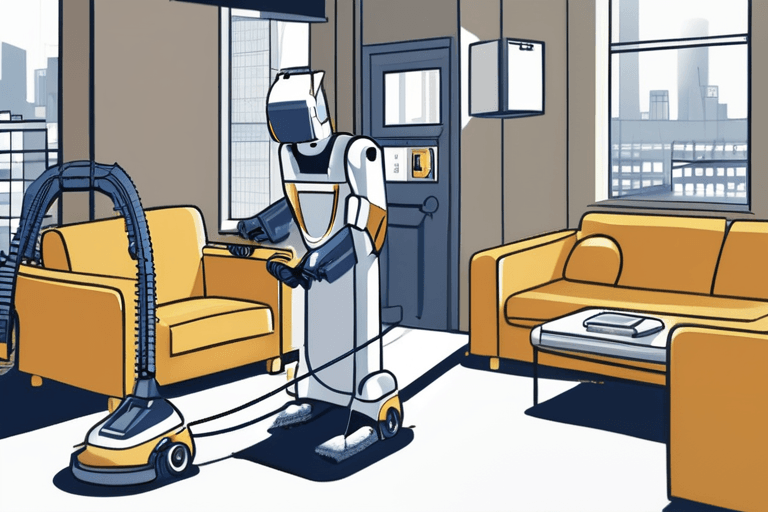
The residential robotics industry experienced a notable expansion in New York City as one apartment building integrated multiple cleaning robots into its maintenance operations, signaling a potential shift in urban living and property management. The landlord of a building occupying half a New York City block introduced an initial floor-cleaning robot, roughly the size of a doghouse, to the lobby before expanding the fleet to three units capable of navigating the building via wireless elevator control.
The initial robot, described as a commercial-grade Roomba, was programmed to clean the lobby floors. According to a resident, Adam Clark Estes, the landlord then enabled the robot to wirelessly connect to the elevator, allowing it to travel between floors and clean hallways. Estes, a technology correspondent at Vox, observed the expansion of the robotic workforce, noting the addition of two larger robots to the original unit.
The integration of these robots reflects a growing trend in automation aimed at reducing labor costs and improving efficiency in building maintenance. The landlord reportedly expressed enthusiasm for the "technical marvel" and the potential for saving human labor hours. However, the deployment also raises questions about the future of human employment in building services and the potential impact on tenant-robot interactions. Estes reported frequent encounters with the robots, stating, "Somehow, I'm always in its way."
Experts in the robotics industry suggest that advancements in sensor technology and artificial intelligence are driving the development of more sophisticated and autonomous cleaning robots. These robots are equipped with features such as obstacle avoidance, mapping capabilities, and wireless communication, enabling them to perform tasks with minimal human supervision. The increasing affordability of these technologies is also contributing to their adoption in residential and commercial settings.
While the deployment in this particular building is limited, it represents a microcosm of broader trends in automation. As robots become more integrated into daily life, questions surrounding their impact on employment, privacy, and social interaction will likely intensify. The long-term effects of this technological shift remain to be seen, but the presence of cleaning robots in residential buildings suggests a future where humans and robots increasingly share living spaces.

















Discussion
Join the conversation
Be the first to comment