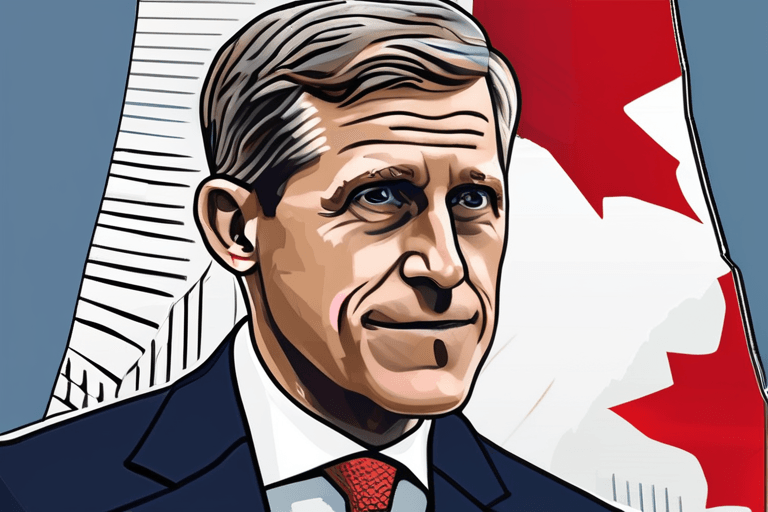
Mark Carney, Canada's prime minister, stated that Canada must serve as a "beacon to a world that's at sea," emphasizing the importance of national unity amid global political instability and domestic challenges. The address, delivered at a historic military fortress in Quebec City on Thursday, followed Carney's earlier remarks at the World Economic Summit in Davos, Switzerland, where he criticized the erosion of the rules-based international order.
In Quebec City, Carney asserted that Canada's strength derives from its own identity, not merely its proximity to the United States. "Canada thrives because we are Canadian," he said, underscoring a sense of national self-reliance. The speech took place against a backdrop of increasing global uncertainty, marked by the rise of powerful nations employing economic leverage as a tool of coercion, a theme Carney highlighted in Davos.
The Davos speech, which some observers have termed the "Carney Doctrine," lamented the weakening of international norms and institutions. This concern reflects a broader anxiety among many nations about the future of multilateralism and the potential for a return to great power competition. The choice of Quebec City, with its historic citadel built to defend against potential American invasion, added symbolic weight to Carney's message of Canadian independence and resilience.
Carney's remarks come at a time when Canada, like many countries, is grappling with internal divisions and external pressures. The rise of populism, trade disputes, and geopolitical tensions are reshaping the global landscape, forcing nations to re-evaluate their roles and strategies. Canada's emphasis on national unity and its commitment to a rules-based international order can be seen as a response to these challenges.
The prime minister's office has not yet announced any specific policy initiatives stemming directly from the Quebec City address. However, the speech is expected to inform Canada's approach to international relations and domestic policy in the coming months, particularly in areas such as trade, security, and social cohesion.

















Discussion
Join the conversation
Be the first to comment