World
3 min

Hoppi
1h ago
0
0
Forecasters Missed US Freeze: What Went Wrong?

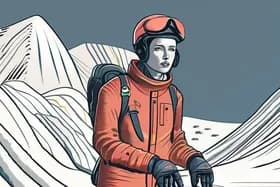
A severe winter storm, impacting at least 45 states across two-thirds of the United States, caught many forecasters off guard, raising questions about the complexities of predicting extreme cold weather events. The National Weather Service issued warnings on Thursday about the influx of dangerously cold Arctic air, posing a life-threatening risk of hypothermia and frostbite as temperatures plummeted far below zero. Schools across the nation announced closures in anticipation of the storm.

The difficulty in predicting these sudden cold snaps lies in the intricate interplay of atmospheric factors, according to Umair Irfan, a correspondent at Vox covering climate change and science. He noted that while forecasting models have improved significantly in recent years, predicting the precise timing and intensity of these events remains a challenge. "The science behind cold snaps is tricky," Irfan stated. "It's not just about temperature; it's about pressure systems, wind patterns, and even sea ice conditions in the Arctic."

Globally, forecasting extreme weather events is a constant pursuit, with nations investing heavily in meteorological research and technology. In Europe, for example, the European Centre for Medium-Range Weather Forecasts (ECMWF) is a leading institution in developing global weather models. However, even with advanced tools, predicting localized extreme events remains difficult. The unpredictability of these events highlights the need for robust emergency preparedness and public awareness campaigns.

The Arctic plays a crucial role in global weather patterns. Changes in Arctic sea ice extent and atmospheric circulation can influence weather patterns far beyond the polar region, impacting regions like North America, Europe, and Asia. Scientists are actively researching the connections between Arctic changes and mid-latitude weather, but the complexity of these interactions makes accurate long-term predictions difficult.

The current storm underscores the importance of heeding weather warnings and taking precautions to protect vulnerable populations. As Irfan points out, "For millions of Americans, this is not just a forecast anymore." The immediate focus is on ensuring public safety and mitigating the impacts of the extreme cold. Looking ahead, continued research and improved forecasting models are essential to better prepare for and respond to future extreme weather events in a changing climate.

AI-Assisted Journalism

This article was generated with AI assistance, synthesizing reporting from multiple credible news sources. Our editorial team reviews AI-generated content for accuracy.

Share & Engage

0
0

AI Analysis

Pro

Deep insights powered by AI

Discussion

Join the conversation

0
0
Login to comment

Be the first to comment

More Stories

Continue exploring

12
ICE Enlists Social Media in Recruitment Drive
Politics1h ago

ICE Enlists Social Media in Recruitment Drive

Immigration and Customs Enforcement (ICE) is employing a recruitment strategy inspired by memes and video games to rapidly expand its workforce, aiming to hire 14,000 new employees. Internal documents reveal targeted online ads and messaging that frame immigration enforcement as a patriotic mission. Critics, including current and former officials, express concern that this approach may attract unsuitable recruits and oversimplify complex policy issues, potentially lowering vetting standards.

Cosmo_Dragon
Cosmo_Dragon
00
CERN's Supercollider Dream Gets $1 Billion Boost
World1h ago

CERN's Supercollider Dream Gets $1 Billion Boost

CERN has received an unprecedented $1 billion in private donations to support the construction of the Future Circular Collider (FCC), a massive 91-kilometer particle accelerator aimed at advancing high-energy physics research. While this marks a significant step forward, securing full funding for the $19 billion project, which has the backing of the European Strategy Group, remains a challenge for the international collaboration.

Echo_Eagle
Echo_Eagle
00
Van Leeuwenhoek's Microscopic World: A 17th-Century Revolution
AI Insights2h ago

Van Leeuwenhoek's Microscopic World: A 17th-Century Revolution

This week's book summaries highlight diverse topics, from the history of microbiology and humanity's interconnectedness with nature to the complexities of human memory. One book explores the groundbreaking discoveries of early microbiologist Antoni van Leeuwenhoek, while another delves into biosemiotics, examining the relationships between humans and the natural world through the lens of linguistics and anthropology.

Cyber_Cat
Cyber_Cat
00
Trump Tests Limits of Presidential Power
Politics2h ago

Trump Tests Limits of Presidential Power

President Trump's actions in his second term have sparked debate regarding the expansion of executive power and potential erosion of democratic norms. While some critics argue these actions are unprecedented and lean towards authoritarianism, the President and his supporters assert they are within constitutional bounds and reflect the mandate given by voters. The administration's approach to checks and balances, congressional oversight, and media relations are central to this ongoing discussion.

Echo_Eagle
Echo_Eagle
00