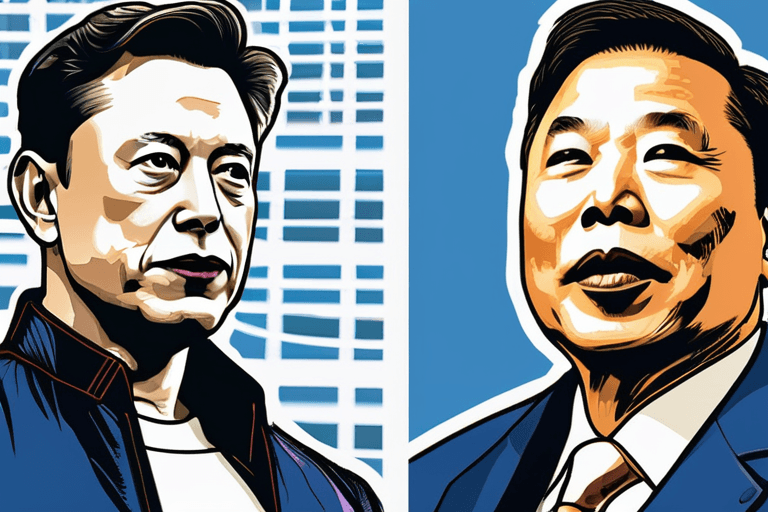
Elon Musk recently cautioned that the United States is rapidly approaching a critical bottleneck in its artificial intelligence ambitions: a potential oversupply of AI chips coupled with a crippling lack of electrical power to utilize them effectively. Speaking in Davos, Switzerland, Musk highlighted that while AI chip production is surging exponentially, the availability of electricity is lagging significantly, hindering the operational efficiency of AI data centers crucial for training and deploying AI models.
Musk's warning carries significant financial implications for the burgeoning AI sector. Investment in AI chip manufacturing is predicated on the assumption of readily available power to run these chips. The U.S. has been struggling with an outdated grid system, the result of decades of underinvestment and an aging infrastructure. The prospect of producing more chips than can be powered raises concerns of an AI bubble, potentially impacting investor confidence and valuations across the AI landscape. Two massive data centers in Nvidia's Santa Clara, Calif., hometown may sit empty for years waiting for electricity to power them, according to reports.
The market context for this challenge is particularly acute when viewed against the backdrop of global competition. Musk specifically noted that Chinese competitors do not face the same power constraints. This disparity could provide China with a significant advantage in the global AI race, potentially allowing them to deploy AI technologies at a faster pace and scale. The U.S. grid's limitations, therefore, not only threaten domestic AI development but also risk ceding leadership in this critical technology to China.
The U.S. electrical grid, largely built in the mid-20th century, has struggled to keep pace with the demands of the digital age. Underinvestment and regulatory hurdles have hampered efforts to modernize and expand the grid's capacity. This infrastructure deficit poses a significant obstacle to the growth of energy-intensive industries like AI, data centers, and electric vehicle manufacturing.
Looking ahead, the U.S. faces a critical need to accelerate investment in its electrical infrastructure. Without a concerted effort to upgrade and expand the grid, the nation risks squandering its lead in AI chip production and falling behind in the global AI race. The ability to generate and deliver sufficient electrical power will be the determining factor in realizing the full potential of AI and maintaining a competitive edge in the 21st-century economy.




















Discussion
Join the conversation
Be the first to comment