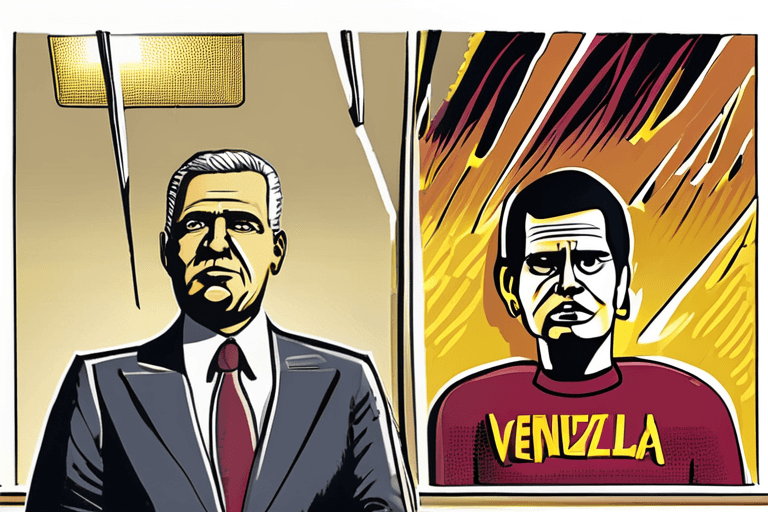
Venezuela's interim leader, Delcy Rodríguez, was caught on leaked video detailing the regime's struggle to control its message amid U.S. pressure, revealing a high-stakes game of political survival played out in the digital age. The video, which surfaced late Tuesday, shows Rodríguez addressing a group of pro-government influencers, claiming that after Nicolás Maduro's capture by U.S. forces, she and other cabinet members were given a chilling ultimatum: comply with Washington's demands or face execution.
Rodríguez, who assumed power after the U.S. attack and has since garnered praise from Donald Trump for her cooperation, admitted in the recording that her compliance was driven by constant threats and blackmail. The recording, reportedly taken during a closed-door meeting, was leaked by an anonymous source within the Venezuelan government, igniting a firestorm of controversy and raising serious questions about the legitimacy of Rodríguez's leadership.
The incident highlights the intense pressure cooker environment within the Venezuelan government and the lengths to which the regime is willing to go to maintain its grip on power. According to industry insiders, the use of influencers to disseminate pro-government narratives is a common tactic employed by authoritarian regimes to bypass traditional media channels and directly shape public opinion. "It's all about controlling the narrative," said Dr. Elena Ramirez, a professor of political communication at the Central University of Venezuela. "In the age of social media, influencers have become key players in the information war."
The cultural impact of the leaked video is already being felt across Venezuela, with many citizens expressing outrage and disbelief at the revelations. The video has gone viral, sparking heated debates on social media platforms and fueling anti-government sentiment. Opposition leaders have seized on the leak as further evidence of the regime's corruption and illegitimacy, calling for Rodríguez's immediate resignation and free and fair elections.
The U.S. State Department declined to comment directly on the leaked video, but reiterated its commitment to supporting the Venezuelan people in their quest for democracy. "We continue to monitor the situation in Venezuela closely," said a State Department spokesperson. "Our focus remains on promoting a peaceful and democratic transition."
The current status of the situation remains fluid, with protests erupting in several major cities across Venezuela. The next developments will likely depend on how Rodríguez responds to the growing pressure and whether the international community takes further action to address the crisis. The leak has undoubtedly dealt a significant blow to the regime's credibility and further destabilized an already fragile political landscape.
















Discussion
Join the conversation
Be the first to comment