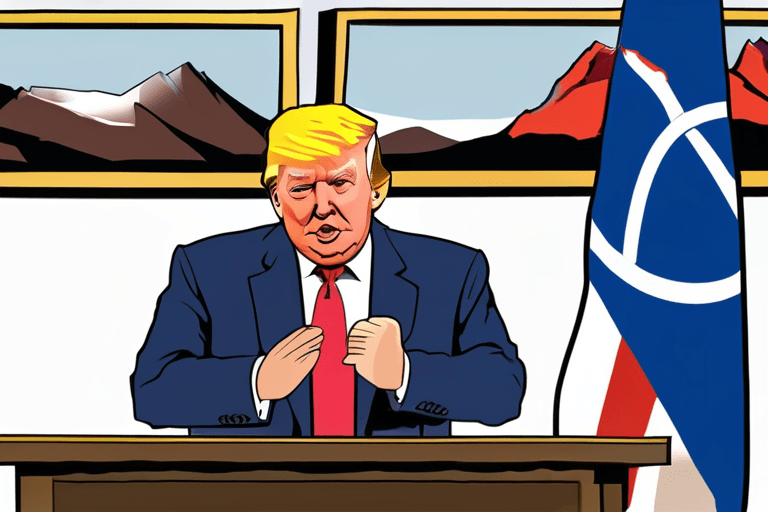
U.S. President Donald Trump announced at the World Economic Forum in Davos a developing framework for a future agreement concerning Greenland, potentially easing previous concerns about tariffs and military intervention. The framework involves discussions related to U.S. missile defense interests and access to Greenland's mineral resources. The announcement, made on January 23, 2026, raises questions about the future for Greenlanders and the broader implications for U.S.-Europe relations, according to Al Jazeera reporting.
The potential deal stems from earlier expressions of interest by the Trump administration in purchasing Greenland, an autonomous territory within the Kingdom of Denmark. These overtures, made public several years prior, were met with resistance from both Danish and Greenlandic officials. The current framework suggests a shift in approach, focusing on strategic and economic cooperation rather than outright acquisition.
Discussions surrounding U.S. missile defense capabilities in Greenland are not new. The U.S. already maintains a military presence at Thule Air Base, a critical component of its ballistic missile early warning system. Expanding this presence or upgrading existing infrastructure could be a key element of any future agreement.
Access to Greenland's mineral resources is another significant factor. The island is believed to possess substantial deposits of rare earth elements and other valuable minerals, which are increasingly important for various industries, including technology and defense. Securing access to these resources could provide the U.S. with a strategic advantage in global markets.
The Al Jazeera report highlights the potential impact on Greenlanders, who will ultimately have a significant say in any agreement reached. Their concerns include environmental protection, economic development, and the preservation of their cultural identity. The Danish government, responsible for Greenland's foreign policy and defense, will also play a crucial role in negotiations.
The framework also has implications for U.S.-European relations. Some European allies may view increased U.S. involvement in Greenland with suspicion, particularly if it is perceived as undermining Danish sovereignty or creating unfair competition in the mineral resources sector. Maintaining transparency and open communication with European partners will be essential to avoid potential friction.
The specifics of the framework remain unclear, and further negotiations will be necessary to finalize any agreement. The Al Jazeera report suggests that the discussions are ongoing, with no firm timeline for completion. The outcome will likely depend on the willingness of all parties to address each other's concerns and find mutually beneficial solutions.


















Discussion
Join the conversation
Be the first to comment