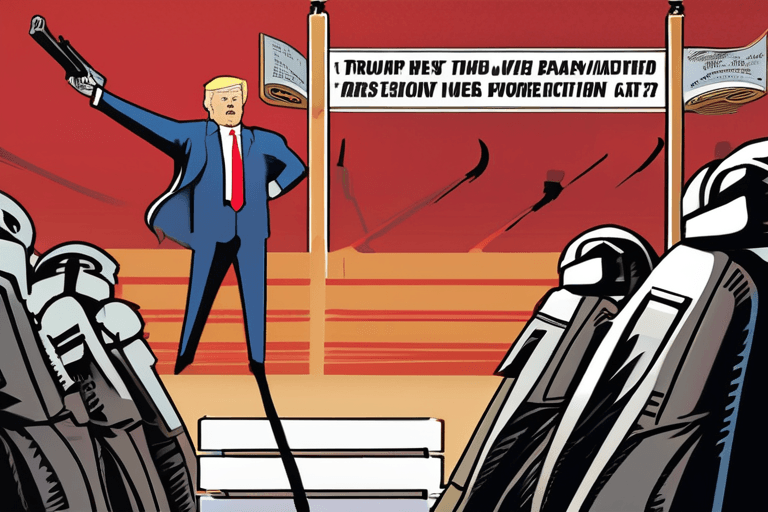
President Trump threatened Thursday to invoke the Insurrection Act in Minnesota to quell protests sparked by recent ICE activity. The threat, posted on Truth Social, cited concerns over the safety of ICE agents and accused "corrupt politicians" of failing to control "professional agitators and insurrectionists."
The Insurrection Act is a federal law that empowers the President to deploy U.S. military troops on American soil in cases of insurrection, rebellion, or domestic violence that hinders the execution of federal laws. Trump stated that he would institute the act if Minnesota officials did not "obey the law and stop the professional agitators."
The protests erupted following the shooting death of Renee Macklin Good, a 37-year-old Minneapolis woman, by an Immigration and Customs Enforcement (ICE) agent. Further fueling the unrest, ICE agents in Minneapolis shot a Venezuelan immigrant in the leg during an attempted arrest on Wednesday. These incidents ignited nationwide demonstrations against ICE's presence and actions.
The Insurrection Act, initially enacted in 1807, has been invoked sparingly throughout U.S. history. According to legal scholars, its use is generally reserved for situations where state authorities are unable or unwilling to maintain order. Previous presidents have used the act to address events ranging from the Whiskey Rebellion to civil rights unrest.
Critics argue that invoking the Insurrection Act could escalate tensions and militarize responses to protests, potentially infringing on civil liberties. Supporters, however, contend that it provides a necessary tool for the President to ensure public safety and enforce federal law when state resources are insufficient.
The Minnesota governor's office has not yet issued a formal response to Trump's threat. Legal experts suggest that any attempt to invoke the Insurrection Act would likely face legal challenges, focusing on whether the conditions for its use have been met. The situation remains fluid, with potential for further protests and legal action.
















Discussion
Join the conversation
Be the first to comment