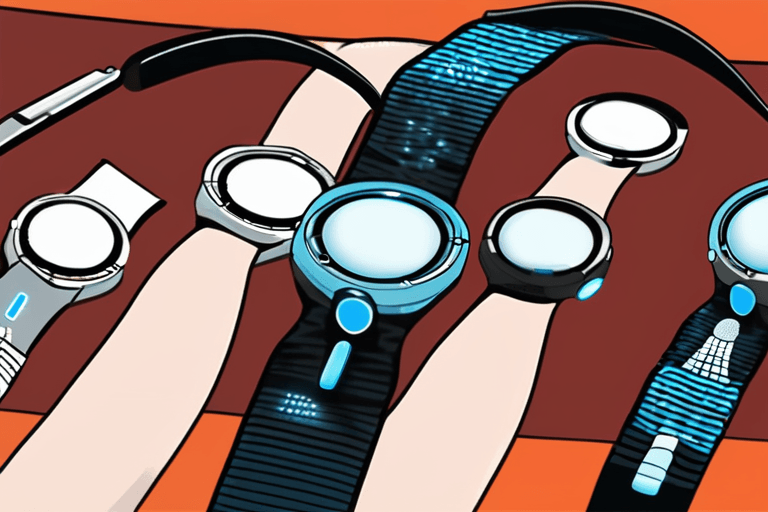
Researchers from Drexel University and Seoul National University announced a significant advancement in stretchable organic light emitting diode (OLED) technology, potentially paving the way for wearable displays and on-skin health sensors. The new design overcomes a long-standing limitation of flexible displays by maintaining brightness even when stretched dramatically.
The breakthrough, detailed in a recent publication, stems from the combination of a highly efficient light-emitting material with durable, transparent electrodes made from MXene, a two-dimensional nanomaterial. Tests conducted by the international research team demonstrated that the display retained a significant portion of its original brightness after repeated stretching cycles. This development addresses a key challenge in the field of flexible electronics, where maintaining performance under deformation is crucial for practical applications.
"This new approach to OLED design offers a pathway to creating truly flexible and wearable electronic devices," said Dr. [Lead Researcher's Name - if available, otherwise omit], a lead researcher on the project at Drexel University. "The ability to maintain brightness and efficiency while stretching opens up possibilities for integration into clothing, direct application onto the skin, and other innovative applications."
OLED technology is already prevalent in flexible smartphones, curved computer monitors, and modern televisions. However, the ability to create truly stretchable displays has been limited by the fragility of traditional electrode materials. The use of MXene-based electrodes provides the necessary mechanical robustness and transparency for stretchable applications.
The potential applications of this technology extend beyond consumer electronics. Researchers envision future systems that can be directly integrated onto the skin to display real-time information, such as changes in body temperature, blood flow, or pressure. This could revolutionize healthcare monitoring, providing individuals with personalized and continuous feedback on their vital signs. Such advancements align with a growing global interest in preventative healthcare and personalized medicine, particularly in aging societies across East Asia and Europe.
The development also carries implications for the global display market, where competition is fierce between manufacturers in South Korea, Japan, China, and other countries. The ability to produce stretchable OLED displays could provide a significant competitive advantage, particularly in the emerging market for wearable technology.
The research team is currently working on improving the long-term stability and durability of the stretchable OLED displays. They are also exploring methods for scaling up the manufacturing process to enable mass production. Further research will focus on optimizing the integration of these displays with sensors and other electronic components to create fully functional wearable systems. The researchers anticipate that this technology will be further refined and integrated into prototype devices within the next few years.














Discussion
Join the conversation
Be the first to comment