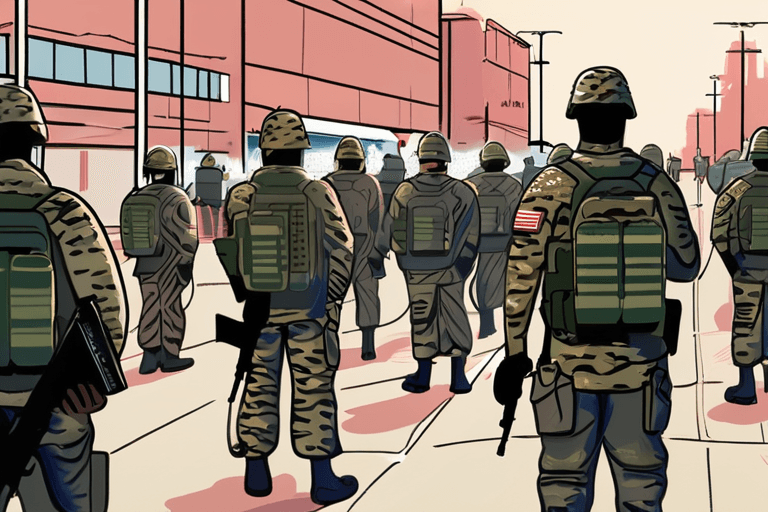
As of Saturday, no final decision had been made regarding the deployment of the soldiers from Alaska, the official added. The soldiers are part of the 11th Airborne Division based at Fort Wainwright.
The potential deployment follows threats made last week by Trump to invoke the Insurrection Act, a rarely used law that permits the deployment of active-duty military personnel for law enforcement purposes within the United States. This law has historically been reserved for situations where state authorities are unable to maintain order.
Minnesota officials have urged protesters to maintain order and peace during demonstrations, particularly in the wake of an incident earlier this month in which an ICE agent fatally shot U.S. citizen Renee Good. The shooting intensified tensions between ICE and community members, fueling further protests.
The situation also unfolds against the backdrop of a recent order issued by a U.S. federal judge limiting the crowd control tactics that ICE agents can employ against "peaceful and unobstructive" protesters in Minneapolis. Judge Kath issued the order on Friday.
The use of AI in news reporting is increasingly prevalent, with algorithms now capable of generating initial drafts of articles based on factual data. This allows human journalists to focus on more in-depth analysis and investigative reporting. However, concerns remain about the potential for bias in AI-generated content and the need for human oversight to ensure accuracy and fairness. The Associated Press, for example, uses AI to assist in earnings reports, but human editors review and refine the output. The latest developments in AI journalism include advancements in natural language processing, enabling AI to understand and respond to complex queries, and the use of machine learning to personalize news feeds for individual readers. These advancements raise important questions about the future of journalism and the role of technology in shaping public discourse.


















Discussion
Join the conversation
Be the first to comment