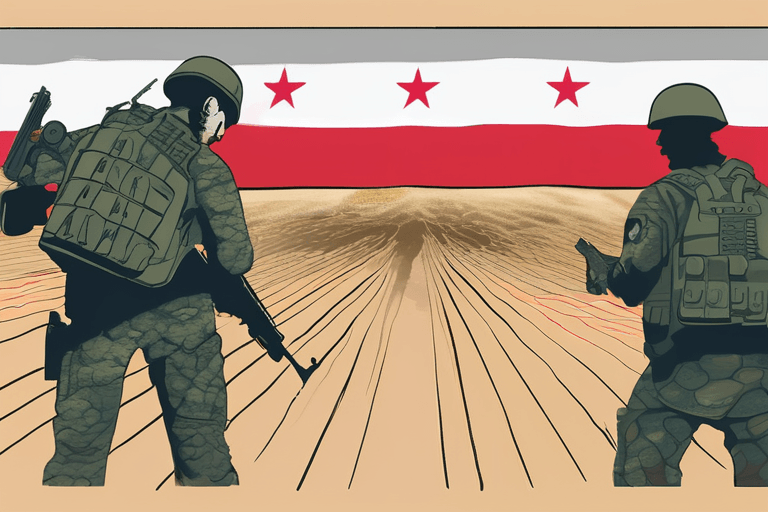
Recent fighting in Syria between the Syrian army and the Syrian Democratic Forces (SDF) presents a "nightmare scenario" for the United States, according to Rob Geist Pinfold, a lecturer at King's College London. The renewed clashes raise concerns about regional stability and the potential resurgence of extremist groups, particularly given the complex geopolitical landscape and the involvement of various international actors.
Pinfold stated that the fighting complicates the U.S.'s strategy in the region, which has primarily focused on supporting the SDF in combating ISIS while also seeking to contain Iranian influence. The conflict between the Syrian army, backed by Russia and Iran, and the SDF, which has received support from the U.S., creates a situation where U.S. interests are directly challenged. This situation is further complicated by Turkey's involvement, which views the SDF as an extension of Kurdish separatists and has conducted military operations against them in the past.
The situation highlights the challenges of using AI-driven analysis to predict and manage conflict zones. AI algorithms can process vast amounts of data, including satellite imagery, social media activity, and news reports, to identify potential hotspots and assess the risk of escalation. However, these models are only as good as the data they are trained on, and they can be biased by the perspectives and agendas of those who create them. Furthermore, AI cannot fully account for the human element in conflict, such as miscalculations, emotions, and unforeseen events.
The implications of this conflict extend beyond the immediate region. A destabilized Syria could lead to a new wave of refugees, further straining resources in neighboring countries and Europe. It could also create opportunities for ISIS and other extremist groups to regroup and launch attacks against Western targets. The U.S. faces a difficult choice: either deepen its involvement in the conflict, risking a direct confrontation with Russia and Iran, or reduce its presence, potentially allowing its adversaries to gain ground.
The current status of the fighting remains fluid, with reports of ongoing clashes in several areas. The U.S. has called for a ceasefire and urged all parties to de-escalate tensions. However, it is unclear whether these calls will be heeded, given the deep-seated animosities and conflicting interests at play. The next developments will likely depend on the actions of the key players involved, including the Syrian government, the SDF, Russia, Iran, Turkey, and the United States. The situation underscores the need for a comprehensive and coordinated approach to resolving the Syrian conflict, one that addresses the underlying causes of instability and promotes a lasting political settlement.



















Discussion
Join the conversation
Be the first to comment