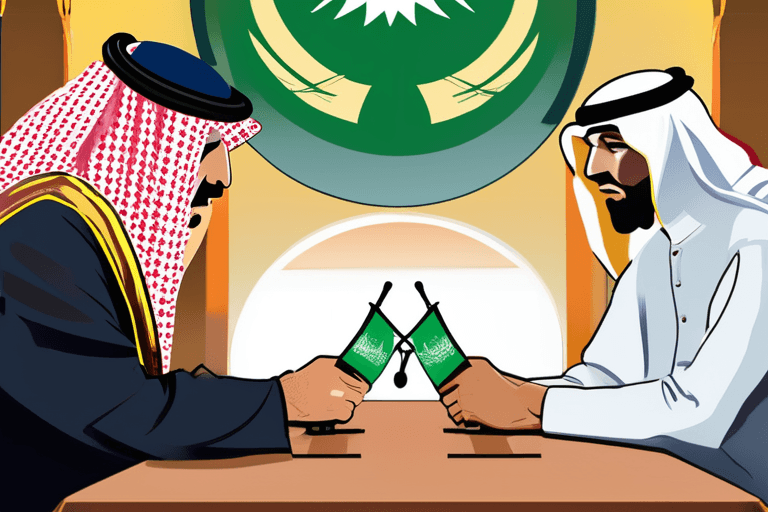
Tensions between Saudi Arabia and the United Arab Emirates, historically close allies in the Middle East, have escalated into a significant rift, raising concerns about a broader realignment in the region. The schism, which began to surface during the civil war in Sudan with the two nations supporting opposing sides, intensified dramatically in December when Saudi Arabia and its allies launched a direct military offensive against the UAE and its allies in Yemen. The UAE responded to the Saudi-led military action by announcing a complete withdrawal from the conflict.
The confrontation in Yemen represents a significant departure from the cooperative relationship the two Gulf states have maintained for decades, particularly in areas of security and foreign policy. Marc Lynch, a professor of political science and international affairs at George Washington University, noted that the key question now is "whether the Saudi-UAE rift settles back into business as usual or accelerates into a wider realignment."
The alliance between Saudi Arabia and the UAE has been a cornerstone of regional stability, particularly in countering Iranian influence and combating terrorism. Both nations have historically aligned on key issues such as the war in Yemen, where they initially joined forces to fight against Houthi rebels. However, diverging interests and strategies, particularly concerning the future of Yemen and the broader Red Sea region, appear to have fueled the current tensions.
The conflict in Sudan further exposed the growing divide, with Saudi Arabia backing one faction and the UAE supporting another, reflecting differing views on the country's political future and regional influence. These disagreements have spilled over into other areas, including economic competition and differing approaches to regional diplomacy.
The implications of this rift are far-reaching, potentially reshaping alliances and power dynamics across the Middle East. A weakened Saudi-UAE partnership could create opportunities for other regional actors, including Iran and Turkey, to expand their influence. Furthermore, it could complicate efforts to resolve ongoing conflicts in the region and address shared challenges such as terrorism and economic instability.
Analysts are closely monitoring the situation to determine whether the current tensions represent a temporary setback or a more fundamental shift in the relationship between Saudi Arabia and the UAE. The coming months will be crucial in determining the future trajectory of this critical partnership and its impact on the broader Middle East.



















Discussion
Join the conversation
Be the first to comment