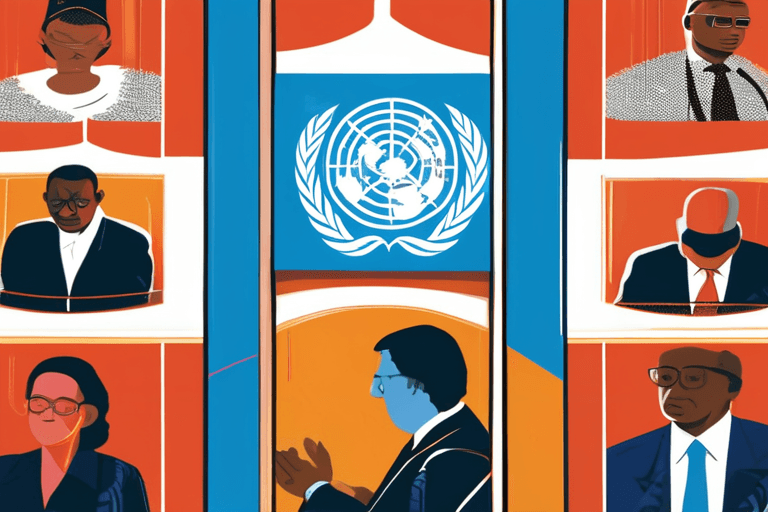
United Nations leaders marked the 80th anniversary of the UN General Assembly (UNGA) on Saturday with expressions of concern over escalating global turmoil and a renewed call for international cooperation. The anniversary was commemorated at Methodist Central Hall in London, the site of the inaugural UNGA meeting in 1946.
United Nations Secretary-General António Guterres addressed attendees, emphasizing the need for member states to recommit to the UN's founding principles amid rising geopolitical tensions and humanitarian crises. The initial meeting, held in the aftermath of World War II, saw representatives from 51 nations gather to forge a path toward lasting peace through multilateral dialogue.
The UNGA was envisioned as the primary platform for world leaders to address global challenges and prevent future conflicts. At the inaugural session, then-U.S. Secretary of State James F. Byrnes stated, "We won the war by fighting together. We must now preserve the peace by working together." Eleanor Roosevelt also delivered a speech highlighting the critical role of gender equality in achieving global stability.
However, the anniversary arrives at a time when the UN's authority and effectiveness are being questioned. Conflicts in various regions, including Eastern Europe, the Middle East, and Africa, have demonstrated the limitations of the UN's peacekeeping capabilities and the challenges of achieving consensus among member states. Furthermore, issues such as climate change, global pandemics, and economic inequality continue to pose significant threats to international security and stability.
Critics argue that the UN's structure, particularly the Security Council's veto power, hinders its ability to respond effectively to crises. Calls for reform have grown louder, with many advocating for a more inclusive and representative decision-making process. Despite these challenges, supporters maintain that the UN remains the most important forum for international diplomacy and cooperation. They point to the UN's role in coordinating humanitarian aid, promoting sustainable development, and addressing global health crises as evidence of its continued relevance.
Looking ahead, the UN faces the daunting task of adapting to a rapidly changing world. The rise of new global powers, the proliferation of non-state actors, and the increasing interconnectedness of global challenges require innovative approaches to diplomacy and conflict resolution. The next UNGA session is scheduled to address these issues, with member states expected to propose new initiatives aimed at strengthening the organization's capacity to address global challenges.




















Discussion
Join the conversation
Be the first to comment