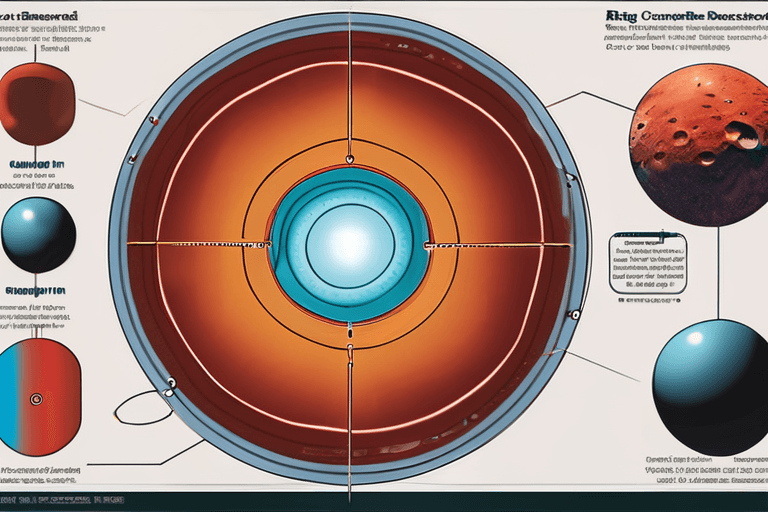
A massive iron structure, hundreds of times the size of Pluto's orbit, has been discovered within the Ring Nebula, according to research published by University College London on January 18, 2026. The structure, containing an amount of iron equivalent to the size of Mars, was detected using a new astronomical instrument capable of mapping nebulae with unprecedented detail.
The unexpected discovery challenges existing models of planetary nebula formation and evolution. Astronomers are currently unsure of the origin of this iron bar. One hypothesis suggests it could be the remnant of a planet that was vaporized during the Ring Nebula's formation. "This is a completely new and unexpected finding," said Dr. Emily Carter, lead author of the study. "We need to rethink our understanding of how these iconic objects form."
The Ring Nebula, also known as Messier 57, is a well-studied example of a planetary nebula, formed when a dying star ejects its outer layers into space. These ejected layers are then illuminated by the hot core of the star, creating a visually stunning ring of gas and dust. The newly discovered iron structure cuts across the center of this ring.
The instrument used to detect the iron bar utilizes advanced spectral analysis techniques, a form of artificial intelligence, to identify the unique light signatures emitted by different elements within the nebula. This AI-powered analysis allowed researchers to distinguish the faint signal of iron from the much brighter emissions of other elements like oxygen and hydrogen. The development of such sophisticated AI tools is revolutionizing astronomical research, enabling scientists to uncover previously hidden structures and phenomena in space.
The implications of this discovery extend beyond our understanding of planetary nebulae. It raises questions about the prevalence of similar structures in other nebulae and the role of iron in the formation of stars and planetary systems. Further research is planned to investigate the composition and distribution of iron in other planetary nebulae, which could shed light on the processes that lead to planet formation and the evolution of stellar systems. The team plans to use advanced machine learning algorithms to analyze data from other nebulae, searching for similar iron structures. This could potentially lead to the discovery of new classes of astronomical objects and a deeper understanding of the universe.



















Discussion
Join the conversation
Be the first to comment