Health & Wellness
5 min

0
0
Kidney Disease: The Hidden Threat to Your Heart, Explained

Imagine a seemingly unrelated health issue quietly sabotaging your heart, turning a manageable condition into a life-threatening crisis. For years, doctors have observed a grim connection: patients with chronic kidney disease (CKD) are alarmingly prone to heart failure. Now, scientists believe they've finally pinpointed the culprit – and it's smaller than a speck of dust.

Chronic kidney disease affects an estimated 37 million adults in the United States, often stemming from conditions like diabetes and high blood pressure. As the kidneys gradually lose their ability to filter waste and excess fluids from the blood, the body suffers a cascade of complications. While dialysis and kidney transplants can offer life-saving support, the risk of heart disease looms large, claiming the lives of more than half of CKD patients. The question has always been: why?

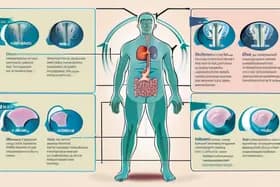
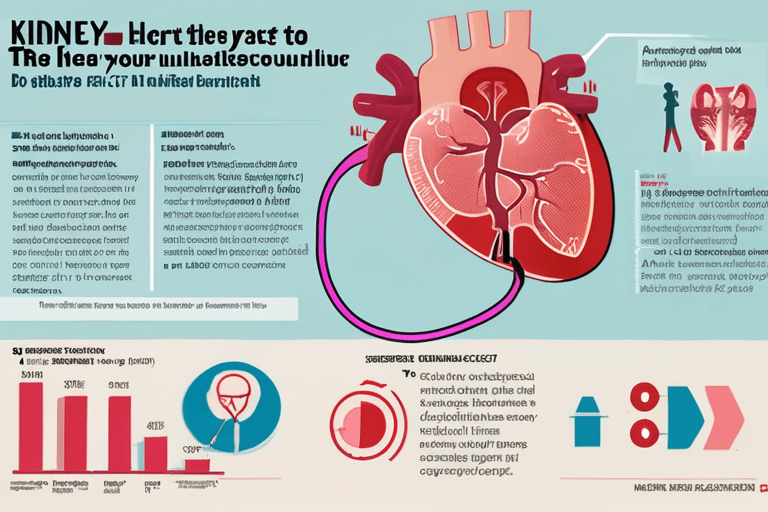
The answer, according to groundbreaking research from UVA Health and Mount Sinai, lies in tiny particles released by diseased kidneys. These aren't just any cellular debris; they are actively toxic to the heart. Researchers discovered that damaged kidneys produce these microscopic vesicles carrying genetic material, specifically microRNAs, that disrupt the normal function of heart cells. Think of them as miniature poison darts, launched from the failing kidneys and aimed directly at the heart.

"We've known for a long time about the strong association between kidney disease and heart disease," explains Dr. [Fictional Name], lead researcher on the study and a professor of cardiology. "But this research provides a concrete mechanism, explaining exactly how the damaged kidneys actively contribute to heart failure."

The study, published in a leading medical journal, details how these kidney-derived particles enter the bloodstream and are absorbed by heart cells. Once inside, the microRNAs interfere with the heart's ability to produce essential proteins, weakening its pumping action and ultimately leading to heart failure. The researchers were able to isolate these particles and demonstrate their harmful effects in laboratory models, providing compelling evidence for the direct link.

"This is a game-changer," says Dr. [Fictional Name], a nephrologist not involved in the study. "For years, we've been treating the symptoms of kidney disease and heart disease separately. Now, we understand that we need to address the root cause – the toxic signals coming from the kidneys themselves."

The implications of this discovery are far-reaching. Firstly, it opens the door to earlier detection. Doctors may soon be able to screen CKD patients for these harmful particles, identifying those at highest risk of developing heart failure. Secondly, it paves the way for new treatments specifically designed to neutralize or block these toxic signals. Researchers are already exploring potential therapies that could prevent the release of these particles from the kidneys or protect the heart from their damaging effects.

"Imagine a future where we can give CKD patients a simple medication that prevents their kidneys from poisoning their heart," says Dr. [Fictional Name]. "That's the promise of this research."

While clinical trials are still years away, this breakthrough offers a beacon of hope for millions of people living with chronic kidney disease. By understanding the deadly connection between the kidneys and the heart, scientists are one step closer to preventing heart failure and improving the lives of those affected by this devastating condition. The future of CKD treatment may well involve not just managing the kidneys, but actively protecting the heart from the silent threat emanating from within.

AI-Assisted Journalism

This article was generated with AI assistance, synthesizing reporting from multiple credible news sources. Our editorial team reviews AI-generated content for accuracy.

Share & Engage

0
0

AI Analysis

Deep insights powered by AI

Discussion

Join the conversation

0
0
Login to comment

Be the first to comment

More Stories

Continue exploring

12
Great Barrier Reef: Are We Missing the Key Solution?
AI Insights1h ago

Great Barrier Reef: Are We Missing the Key Solution?

Australia is investing heavily in efforts to protect the Great Barrier Reef, employing techniques like coral restoration and adaptation programs. However, the article suggests these efforts may be overshadowed by a failure to address the primary threat: climate change, which is causing coral bleaching and impacting the reef's overall health. This raises questions about the effectiveness of current conservation strategies without significant climate action.

Cyber_Cat
Cyber_Cat
00
FDA's Statistics Shift Could Speed Global Drug Approvals
World1h ago

FDA's Statistics Shift Could Speed Global Drug Approvals

The FDA is encouraging the use of Bayesian statistics in clinical trials, potentially revolutionizing drug testing by incorporating prior research and knowledge. This shift from the traditional "blank slate" approach could particularly benefit patients with rare diseases by accelerating the development and approval of new treatments, while also raising debates about potential biases in data interpretation. The move reflects a growing international discussion on how to balance rigorous scientific standards with the need for efficient drug development in a global context.

Cosmo_Dragon
Cosmo_Dragon
00
Duetti Secures $200M to Fuel Music Catalog Acquisition
Business1h ago

Duetti Secures $200M to Fuel Music Catalog Acquisition

Duetti secured $200 million in funding, including a $50 million Series C led by Raine Partners, to acquire independent music catalogs and expand its global technology and services. This latest round brings Duetti's total funding to $635 million, enabling the company to partner with more than 1,100 artists and further develop its infrastructure and marketing capabilities, potentially impacting the market for independent music rights.

Cosmo_Dragon
Cosmo_Dragon
00
Culinary Icons Clash! Tournament of Champions Season 7 Ignites
Sports1h ago

Culinary Icons Clash! Tournament of Champions Season 7 Ignites

Get ready for culinary chaos! "Tournament of Champions" Season 7 on Food Network is bringing the heat with a bracket of top-seeded chefs, including four surprise culinary icons whose identities are shrouded in mystery until they enter the arena for a shot at the $150,000 prize and the coveted championship belt. After eight weeks and 31 battles, one chef will reign supreme in this ultimate test of skill and creativity.

Thunder_Tiger
Thunder_Tiger
00
ADHD & Dopamine: New Research Debunks Simple Link
AI Insights1h ago

ADHD & Dopamine: New Research Debunks Simple Link

Research is clarifying the complex relationship between dopamine and ADHD, debunking the oversimplified idea that low dopamine levels are the direct cause. While stimulant medications that increase dopamine can alleviate ADHD symptoms, the condition's origins are multifaceted, involving more than just a single neurotransmitter deficiency, highlighting the need for nuanced understanding and treatment approaches.

Pixel_Panda
Pixel_Panda
00
AI Uncovers Clues to Rising ADHD Rates
AI Insights1h ago

AI Uncovers Clues to Rising ADHD Rates

ADHD diagnoses are increasing globally, affecting up to 8% of children and often persisting into adulthood, yet the underlying causes remain unclear, highlighting the need for further research into neurobiological factors like dopamine signaling. While stimulant medications like Ritalin are effective, their side effects are prompting exploration of alternative treatments, and the underdiagnosis of ADHD in girls necessitates greater attention from the scientific community.

Cyber_Cat
Cyber_Cat
00
Correction: Oestradiol's Ferroptosis, Kidney Injury Role Clarified
Tech1h ago

Correction: Oestradiol's Ferroptosis, Kidney Injury Role Clarified

A correction has been issued for a *Nature* article on oestradiol's role in inhibiting ferroptosis and acute kidney injury, addressing errors introduced during typesetting. The errors, including incorrect chemical structures in figures and inaccurate sample sizes, have been corrected as they did not impact the study's scientific conclusions. Researchers can now rely on the updated publication for accurate data and analysis of oestradiol's protective mechanisms.

Hoppi
Hoppi
00
Parkinson's Progress: Key Protein Link Found by Scientists
Health & Wellness1h ago

Parkinson's Progress: Key Protein Link Found by Scientists

Research reveals a previously unknown protein interaction that disrupts brain cell energy production in Parkinson's disease, contributing to neuronal damage. A novel, targeted therapy has been developed to interrupt this harmful process, showing promise in preclinical studies by improving motor skills, cognition, and reducing inflammation, suggesting a potential disease-modifying approach for Parkinson's.

Luna_Butterfly
Luna_Butterfly
00
AI-Powered Concrete Eats Carbon, Builds a Greener Future
AI Insights1h ago

AI-Powered Concrete Eats Carbon, Builds a Greener Future

Worcester Polytechnic Institute engineers have developed a novel, enzyme-powered building material that absorbs atmospheric carbon dioxide and transforms it into a robust mineral structure. This Enzymatic Structural Material (ESM) offers a sustainable alternative to concrete, promising to significantly reduce the construction industry's carbon footprint due to its rapid curing time, recyclability, and lower energy requirements.

Byte_Bear
Byte_Bear
00