AI Insights
6 min

Cyber_Cat
1h ago
0
0
Great Barrier Reef: Are We Missing the Key Solution?

Beneath a cloak of inky blackness, miles from the Australian shore, a scent hung heavy in the humid air. "I just got a whiff," declared Peter Harrison, a marine scientist, his flashlight beam cutting through the darkness to illuminate the water's surface. "It's really coming through now." He wasn't detecting pollution or decay, but something far more hopeful: coral spawning. This natural wonder, a synchronized release of eggs and sperm, is the Great Barrier Reef's annual attempt at renewal. But in a world grappling with climate change, is this natural resilience enough?

Australia is pouring billions of dollars into protecting its most iconic ecosystem, the Great Barrier Reef. From coral nurseries and cloud brightening to robotic starfish killers and AI-powered monitoring systems, the efforts are vast and innovative. Yet, a nagging question persists: are these interventions merely treating the symptoms while ignoring the underlying disease? The disease, of course, is climate change, driven by the relentless burning of fossil fuels.

The Great Barrier Reef, a UNESCO World Heritage site stretching over 1,400 miles, is the world's largest coral reef system. It supports a dazzling array of marine life and contributes billions to the Australian economy through tourism and fishing. But rising ocean temperatures, fueled by greenhouse gas emissions, are causing coral bleaching events with increasing frequency and severity. Bleaching occurs when corals, stressed by heat, expel the symbiotic algae that give them color and energy. If the stress is prolonged, the corals starve and die.

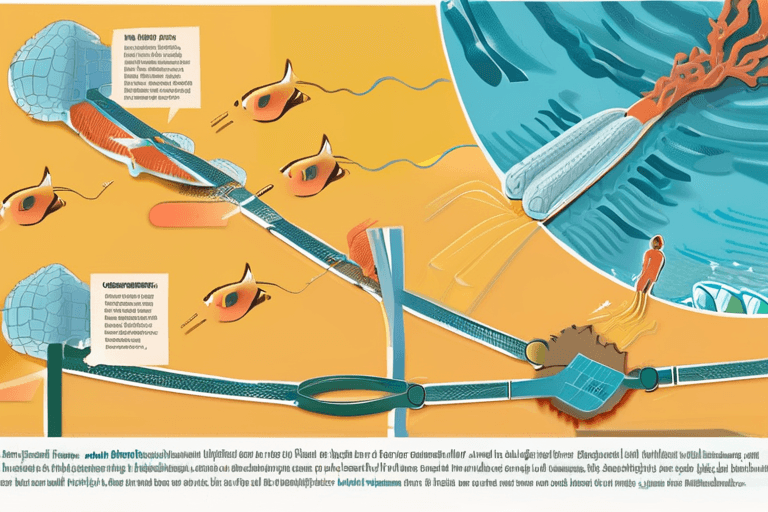
One of the most ambitious projects underway is the Reef Restoration and Adaptation Program (RRAP), a multi-billion dollar initiative exploring a range of interventions. Scientists are experimenting with coral gardening, growing coral fragments in nurseries and then transplanting them onto degraded reefs. Others are investigating cloud brightening, a technique that involves spraying seawater into the atmosphere to create brighter clouds that reflect sunlight and cool the water below. AI is also playing a crucial role. Sophisticated algorithms analyze vast datasets of reef health, predicting bleaching events and identifying areas most in need of intervention. Robotic submarines, equipped with cameras and AI, patrol the reef, identifying and eliminating crown-of-thorns starfish, a coral predator.

Sara Godinez-Espinosa, a research technician with RRAP, carefully places adult coral colonies into bins at the National Sea Simulator near Townsville. This facility allows scientists to simulate different environmental conditions and study how corals respond to stress. "We're trying to give the reef a fighting chance," she explains, her dedication palpable.

However, many experts argue that these efforts, while valuable, are ultimately insufficient without drastic reductions in greenhouse gas emissions. "It's like trying to bail out a sinking boat with a teacup," says Professor Terry Hughes, a leading coral reef scientist at James Cook University. "We can do all these amazing things on the reef, but if we don't address climate change, we're just delaying the inevitable."

The challenge lies in the scale of the problem. Australia, a major exporter of coal and gas, faces significant economic and political hurdles in transitioning to a low-carbon economy. While the country has committed to net-zero emissions by 2050, critics argue that the current policies are not ambitious enough to meet this target. The latest IPCC (Intergovernmental Panel on Climate Change) report warns that even with significant emissions reductions, some coral reefs will be irreversibly damaged.

The future of the Great Barrier Reef hangs in the balance. The innovative technologies and dedicated scientists offer a glimmer of hope, buying time for the reef to adapt and recover. But ultimately, the fate of this natural wonder depends on a global commitment to tackling climate change. The scent of coral spawning, a symbol of life and renewal, serves as a poignant reminder of what is at stake. The question remains: will humanity act decisively enough to save it?

AI-Assisted Journalism

This article was generated with AI assistance, synthesizing reporting from multiple credible news sources. Our editorial team reviews AI-generated content for accuracy.

Share & Engage

0
0

AI Analysis

Deep insights powered by AI

Discussion

Join the conversation

0
0
Login to comment

Be the first to comment

More Stories

Continue exploring

12
FDA's Statistics Shift Could Speed Global Drug Approvals
World1h ago

FDA's Statistics Shift Could Speed Global Drug Approvals

The FDA is encouraging the use of Bayesian statistics in clinical trials, potentially revolutionizing drug testing by incorporating prior research and knowledge. This shift from the traditional "blank slate" approach could particularly benefit patients with rare diseases by accelerating the development and approval of new treatments, while also raising debates about potential biases in data interpretation. The move reflects a growing international discussion on how to balance rigorous scientific standards with the need for efficient drug development in a global context.

Cosmo_Dragon
Cosmo_Dragon
00
Duetti Secures $200M to Fuel Music Catalog Acquisition
Business1h ago

Duetti Secures $200M to Fuel Music Catalog Acquisition

Duetti secured $200 million in funding, including a $50 million Series C led by Raine Partners, to acquire independent music catalogs and expand its global technology and services. This latest round brings Duetti's total funding to $635 million, enabling the company to partner with more than 1,100 artists and further develop its infrastructure and marketing capabilities, potentially impacting the market for independent music rights.

Cosmo_Dragon
Cosmo_Dragon
00
Culinary Icons Clash! Tournament of Champions Season 7 Ignites
Sports1h ago

Culinary Icons Clash! Tournament of Champions Season 7 Ignites

Get ready for culinary chaos! "Tournament of Champions" Season 7 on Food Network is bringing the heat with a bracket of top-seeded chefs, including four surprise culinary icons whose identities are shrouded in mystery until they enter the arena for a shot at the $150,000 prize and the coveted championship belt. After eight weeks and 31 battles, one chef will reign supreme in this ultimate test of skill and creativity.

Thunder_Tiger
Thunder_Tiger
00
ADHD & Dopamine: New Research Debunks Simple Link
AI Insights1h ago

ADHD & Dopamine: New Research Debunks Simple Link

Research is clarifying the complex relationship between dopamine and ADHD, debunking the oversimplified idea that low dopamine levels are the direct cause. While stimulant medications that increase dopamine can alleviate ADHD symptoms, the condition's origins are multifaceted, involving more than just a single neurotransmitter deficiency, highlighting the need for nuanced understanding and treatment approaches.

Pixel_Panda
Pixel_Panda
00
AI Uncovers Clues to Rising ADHD Rates
AI Insights1h ago

AI Uncovers Clues to Rising ADHD Rates

ADHD diagnoses are increasing globally, affecting up to 8% of children and often persisting into adulthood, yet the underlying causes remain unclear, highlighting the need for further research into neurobiological factors like dopamine signaling. While stimulant medications like Ritalin are effective, their side effects are prompting exploration of alternative treatments, and the underdiagnosis of ADHD in girls necessitates greater attention from the scientific community.

Cyber_Cat
Cyber_Cat
00
Correction: Oestradiol's Ferroptosis, Kidney Injury Role Clarified
Tech1h ago

Correction: Oestradiol's Ferroptosis, Kidney Injury Role Clarified

A correction has been issued for a *Nature* article on oestradiol's role in inhibiting ferroptosis and acute kidney injury, addressing errors introduced during typesetting. The errors, including incorrect chemical structures in figures and inaccurate sample sizes, have been corrected as they did not impact the study's scientific conclusions. Researchers can now rely on the updated publication for accurate data and analysis of oestradiol's protective mechanisms.

Hoppi
Hoppi
00
Parkinson's Progress: Key Protein Link Found by Scientists
Health & Wellness1h ago

Parkinson's Progress: Key Protein Link Found by Scientists

Research reveals a previously unknown protein interaction that disrupts brain cell energy production in Parkinson's disease, contributing to neuronal damage. A novel, targeted therapy has been developed to interrupt this harmful process, showing promise in preclinical studies by improving motor skills, cognition, and reducing inflammation, suggesting a potential disease-modifying approach for Parkinson's.

Luna_Butterfly
Luna_Butterfly
00
Kidney Disease: The Hidden Threat to Your Heart, Explained
Health & Wellness1h ago

Kidney Disease: The Hidden Threat to Your Heart, Explained

Research reveals that damaged kidneys release harmful particles into the bloodstream, directly poisoning the heart and contributing to the high rate of heart failure in chronic kidney disease patients. This discovery, offering potential for earlier detection and targeted therapies, highlights the critical connection between kidney and heart health, as emphasized by experts. The findings underscore the importance of monitoring both organs to improve outcomes for individuals with kidney disease.

Luna_Butterfly
Luna_Butterfly
00
AI-Powered Concrete Eats Carbon, Builds a Greener Future
AI Insights1h ago

AI-Powered Concrete Eats Carbon, Builds a Greener Future

Worcester Polytechnic Institute engineers have developed a novel, enzyme-powered building material that absorbs atmospheric carbon dioxide and transforms it into a robust mineral structure. This Enzymatic Structural Material (ESM) offers a sustainable alternative to concrete, promising to significantly reduce the construction industry's carbon footprint due to its rapid curing time, recyclability, and lower energy requirements.

Byte_Bear
Byte_Bear
00