Elon Musk tempered expectations this week regarding the rollout of Tesla's Cybercab robotaxis and Optimus humanoid robots, signaling a potentially protracted path to mass production. This announcement arrives as Tesla seeks to solidify its position in the burgeoning AI and automation sectors, a pivot heavily reliant on the successful deployment of these innovative products.
Musk, responding to investor inquiries on social media, cautioned that initial production volumes for both Cybercab and Optimus would be "agonizingly slow." He attributed this anticipated delay to the high degree of novelty involved, noting that "almost everything is new" in both projects. This complexity, he explained, directly impacts the production ramp-up, following an "S-curve" pattern where initial growth is gradual before accelerating. While specific production targets for the initial phase were not disclosed, Musk's comments suggest that the previously anticipated rapid deployment timeline is unlikely to materialize.
The slower-than-expected rollout could impact investor confidence and Tesla's projected revenue streams. Analysts had factored in potential revenue from robotaxi services and Optimus sales into their long-term forecasts. Any significant delay could lead to downward revisions in these projections, potentially affecting Tesla's stock price. Furthermore, competitors in the autonomous vehicle and robotics spaces could gain a competitive advantage if Tesla's entry into these markets is significantly delayed.
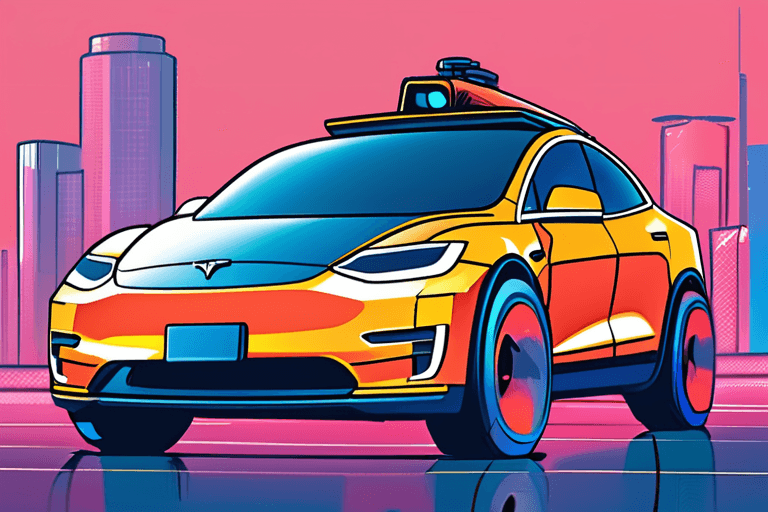
Tesla's ambitious foray into humanoid robotics and autonomous vehicles represents a strategic diversification beyond its core electric vehicle business. The Cybercab, envisioned as a fully autonomous ride-hailing service, aims to disrupt the transportation industry. Optimus, on the other hand, is designed to perform a wide range of tasks, from manufacturing to domestic chores, potentially revolutionizing labor markets. These initiatives are underpinned by Tesla's advancements in artificial intelligence and machine learning, which are crucial for enabling autonomous navigation and complex robotic movements.
Looking ahead, the pace of production for both Cybercab and Optimus will be closely monitored by investors and industry observers. The successful navigation of the initial "agonizingly slow" phase will be critical in determining Tesla's long-term prospects in these emerging markets. While Musk's recent comments suggest a more realistic timeline, the ultimate success of Tesla's bet on robots hinges on its ability to overcome the technical and logistical challenges inherent in bringing these complex products to mass production.
















Discussion
Join the conversation
Be the first to comment