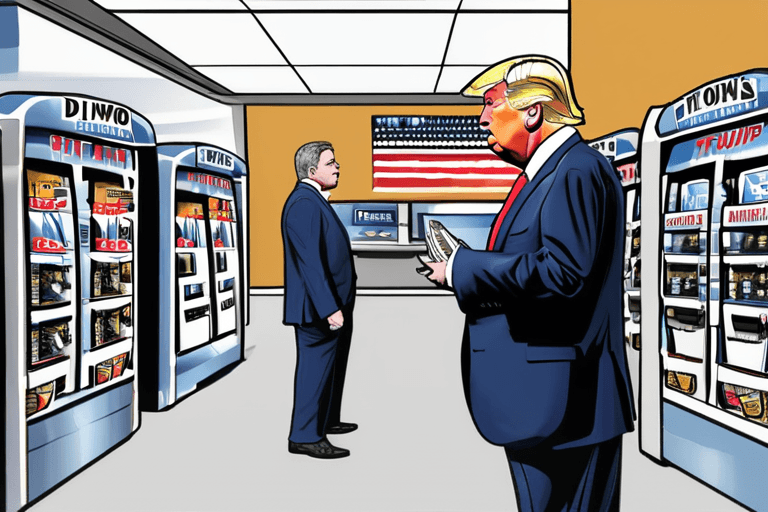
JPMorgan Chase CEO Jamie Dimon warned that a proposal by former U.S. President Donald Trump to cap credit card interest rates would be "an economic disaster," potentially cutting off credit access for a significant portion of the American population. Dimon, speaking at the World Economic Forum in Davos, Switzerland, stated that the proposed cap of 10% would disproportionately impact restaurants, retailers, travel firms, and schools, as well as a large segment of American consumers.
Trump's proposal, shared on his Truth Social platform earlier this month, suggested limiting credit card interest rates to 10% for one year, beginning January 20th. The former president did not elaborate on the mechanism for implementing such a cap or its legal enforceability.
Dimon argued that such a drastic measure would restrict credit access for approximately 80% of Americans, who rely on credit cards as a financial safety net. "It would be an economic disaster, and I'm not making that up because our business we would survive it by the way," Dimon said.
The debate over credit card interest rate caps is not new in the United States. Progressive politicians, such as Senators Bernie Sanders and Elizabeth Warren, have previously advocated for similar measures, arguing that they protect consumers from predatory lending practices. However, critics contend that such caps can lead to unintended consequences, such as reduced credit availability, particularly for lower-income individuals and those with less-than-perfect credit histories.
The potential impact of a credit card interest rate cap extends beyond the U.S. financial system. Credit card debt is a significant component of household debt in many developed economies, and changes to interest rates can have ripple effects on consumer spending and economic growth. In countries with less developed financial systems, access to credit is often more limited, and interest rate caps could further restrict access for individuals and small businesses.
It remains unclear whether Trump will pursue this plan further, and the legal and practical challenges of implementing such a cap are considerable. The proposal has sparked debate among economists and financial experts, with some arguing that it could provide much-needed relief to struggling consumers, while others warn of potential negative consequences for the broader economy. The current status of the proposal is uncertain, and future developments will likely depend on the political landscape and any formal policy proposals that may emerge.

















Discussion
Join the conversation
Be the first to comment