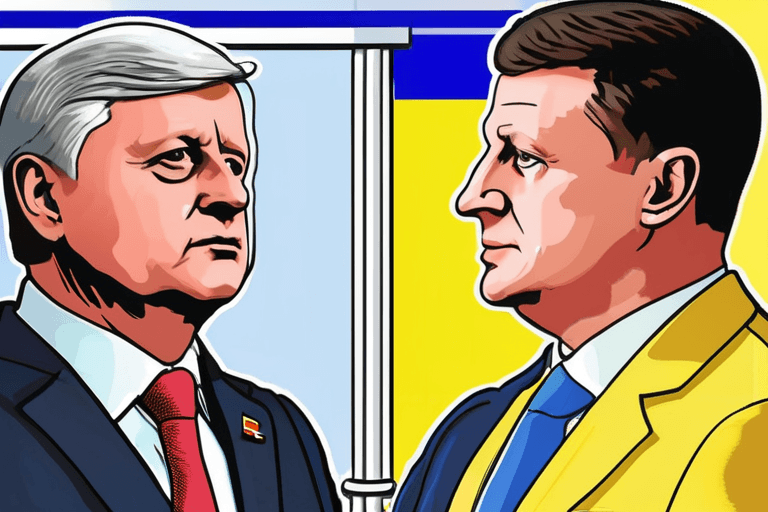
Ukrainian President Volodymyr Zelenskyy called on Europe to demonstrate greater courage and unity on the global stage, citing concerns about the reliability of NATO's dependence on the United States. Zelenskyy's remarks were delivered at the World Economic Forum in Davos on Jan. 22, 2026, against a backdrop of escalating Russian missile capabilities and heightened tensions surrounding Greenland.
Zelenskyy emphasized the need for Europe to assert itself as a significant global power, capable of independent action and strategic decision-making. He warned that over-reliance on the U.S. within the NATO framework could prove precarious, particularly given the evolving geopolitical landscape. The Ukrainian president's comments come at a time when many European nations are grappling with questions about their own defense capabilities and their relationship with both the United States and Russia.
The situation in Greenland, while geographically distant from Ukraine, highlights the complexities of international relations and the potential for unexpected flashpoints. Increased global interest in the Arctic region, driven by climate change and resource exploration, has amplified strategic competition among major powers, including the U.S., Russia, and several European nations.
Zelenskyy's appeal reflects Ukraine's ongoing struggle to maintain its sovereignty and territorial integrity in the face of Russian aggression. Since 2014, Ukraine has been engaged in a conflict with Russia and Russian-backed separatists in the eastern Donbas region, and the annexation of Crimea by Russia has further strained relations. Ukraine views a strong and unified Europe as crucial to deterring further Russian expansionism and ensuring its own security.
The call for European unity also resonates with broader discussions about the future of the European Union. The bloc has faced internal divisions over issues such as migration, economic policy, and the rule of law. Some observers believe that a more assertive foreign policy could help to strengthen European identity and foster greater solidarity among member states. However, achieving consensus on key strategic issues remains a significant challenge, given the diverse interests and perspectives within the EU. The coming months will likely reveal how European leaders respond to Zelenskyy's appeal and whether they are willing to embrace a more proactive role in global affairs.



















Discussion
Join the conversation
Be the first to comment