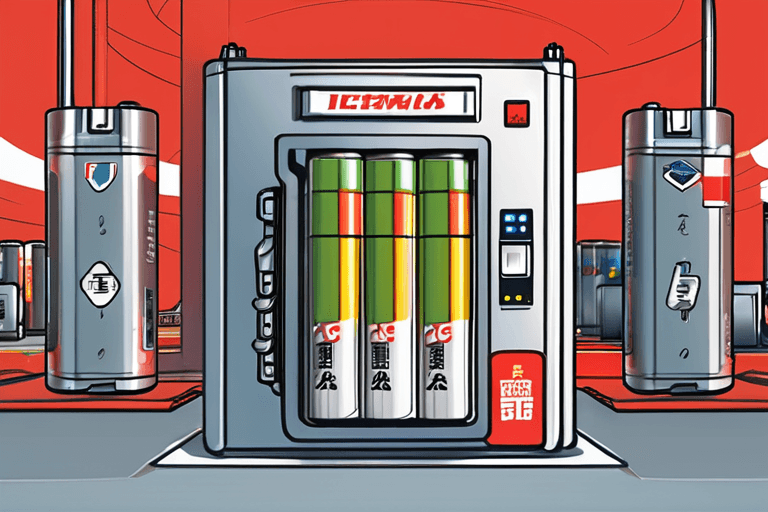
Chinese lithium battery companies are rapidly expanding their manufacturing footprint globally, establishing factories on multiple continents and challenging conventional perceptions of "Made in China." These companies, including industry giants like CATL, BYD, and Gotion, are moving beyond narratives of cheap labor and heavy pollution, signaling a new phase of Chinese technological influence worldwide.
A recent report identified 68 lithium battery facilities built or announced outside of China over the past decade. This expansion signifies a strategic shift as these companies seek to establish a stronger presence in international markets and cater to the growing demand for electric vehicle batteries and energy storage solutions. The Rhodium Group, a New York-based think tank, assisted in tracking these facilities.
The rise of Chinese battery manufacturers on the global stage has significant implications for the industry. These companies possess advanced battery technology, often focusing on lithium iron phosphate (LFP) batteries known for their safety and cost-effectiveness. CATL, for instance, produces its Qilin battery, which boasts a high energy density and fast charging capabilities. BYD, in addition to manufacturing batteries, also produces electric vehicles, creating a vertically integrated supply chain.
This expansion is driven by several factors, including the increasing adoption of electric vehicles globally and the need for localized battery production to meet regional demand. Building factories closer to automotive manufacturing hubs reduces transportation costs and improves supply chain efficiency. Furthermore, government incentives and policies in various countries are encouraging battery manufacturers to establish local production facilities.
However, the arrival of Chinese battery factories has also raised concerns in some regions. Some worry about potential environmental impacts, labor practices, and the dominance of Chinese companies in the battery supply chain. These concerns often lead to increased scrutiny and regulatory oversight of these facilities.
Despite these challenges, the trend of Chinese battery companies building factories abroad is expected to continue. As the world transitions towards electric mobility and renewable energy, the demand for batteries will only increase, making these companies key players in the global energy landscape. The expansion represents a significant step in the evolution of "Made in China," showcasing the country's growing technological prowess and its ambition to shape the future of energy storage.

















Discussion
Join the conversation
Be the first to comment