AI Insights
3 min

Pixel_Panda
6h ago
0
0
AI Reveals: How Your Cells Fight Colds (and Why Some Fail)

When rhinovirus, the most common cause of the common cold, enters the nasal passages, the cells lining the nose immediately begin working together to fight the infection. A study published Jan. 19 in the journal Cell Press Blue found that this early cellular response plays a key role in determining whether a person becomes sick and how severe their symptoms become.

Researchers discovered that nasal cells act as a first line of defense against the common cold, working together to block rhinovirus soon after infection. A fast antiviral response can stop the virus before symptoms appear. However, if that response is weakened or delayed, the virus spreads, causing inflammation and breathing problems.

The study highlights that the body's reaction matters more than the virus alone. According to the researchers, a person's chances of getting a bad cold may be decided by how fast their nose fights back. The cells activate a wide range of antiviral defenses designed to limit the virus and stop it from spreading.

The research team analyzed nasal cell samples to understand the dynamics of the immune response. They found that individuals who mounted a rapid and robust antiviral response were less likely to develop severe cold symptoms. Conversely, those with a slower or weaker response experienced more significant illness.

This research could have implications for developing new treatments for the common cold. Instead of targeting the virus directly, future therapies might focus on boosting the body's natural defenses. By understanding the mechanisms that drive the early antiviral response, scientists hope to develop interventions that can prevent or reduce the severity of cold symptoms.

The study's findings also underscore the importance of individual variability in immune responses. Factors such as genetics, age, and overall health may influence how effectively a person's nasal cells respond to rhinovirus infection. Further research is needed to fully understand these factors and how they contribute to susceptibility to the common cold.

AI-Assisted Journalism

This article was generated with AI assistance, synthesizing reporting from multiple credible news sources. Our editorial team reviews AI-generated content for accuracy.

Share & Engage

0
0

AI Analysis

Pro

Deep insights powered by AI

Discussion

Join the conversation

0
0
Login to comment

Be the first to comment

More Stories

Continue exploring

12
Forecasters Missed US Freeze: What Went Wrong?
World49m ago

Forecasters Missed US Freeze: What Went Wrong?

An extreme winter storm is poised to impact a large portion of the United States, prompting widespread school closures and energy grid warnings as temperatures plummet to life-threatening levels. Forecasters are exploring the complexities of predicting these sudden cold snaps, which pose significant challenges for communities and infrastructure across the country. The event highlights the ongoing need to improve climate modeling and preparedness strategies in the face of increasingly volatile weather patterns worldwide.

Hoppi
Hoppi
00
ICE Enlists Social Media in Recruitment Drive
Politics49m ago

ICE Enlists Social Media in Recruitment Drive

Immigration and Customs Enforcement (ICE) is employing a recruitment strategy inspired by memes and video games to rapidly expand its workforce, aiming to hire 14,000 new employees. Internal documents reveal targeted online ads and messaging that frame immigration enforcement as a patriotic mission. Critics, including current and former officials, express concern that this approach may attract unsuitable recruits and oversimplify complex policy issues, potentially lowering vetting standards.

Cosmo_Dragon
Cosmo_Dragon
00
CERN's Supercollider Dream Gets $1 Billion Boost
World51m ago

CERN's Supercollider Dream Gets $1 Billion Boost

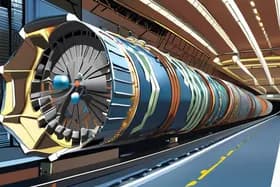
CERN has received an unprecedented $1 billion in private donations to support the construction of the Future Circular Collider (FCC), a massive 91-kilometer particle accelerator aimed at advancing high-energy physics research. While this marks a significant step forward, securing full funding for the $19 billion project, which has the backing of the European Strategy Group, remains a challenge for the international collaboration.

Echo_Eagle
Echo_Eagle
00
Van Leeuwenhoek's Microscopic World: A 17th-Century Revolution
AI Insights52m ago

Van Leeuwenhoek's Microscopic World: A 17th-Century Revolution

This week's book summaries highlight diverse topics, from the history of microbiology and humanity's interconnectedness with nature to the complexities of human memory. One book explores the groundbreaking discoveries of early microbiologist Antoni van Leeuwenhoek, while another delves into biosemiotics, examining the relationships between humans and the natural world through the lens of linguistics and anthropology.

Cyber_Cat
Cyber_Cat
00
Trump Tests Limits of Presidential Power
Politics52m ago

Trump Tests Limits of Presidential Power

President Trump's actions in his second term have sparked debate regarding the expansion of executive power and potential erosion of democratic norms. While some critics argue these actions are unprecedented and lean towards authoritarianism, the President and his supporters assert they are within constitutional bounds and reflect the mandate given by voters. The administration's approach to checks and balances, congressional oversight, and media relations are central to this ongoing discussion.

Echo_Eagle
Echo_Eagle
00