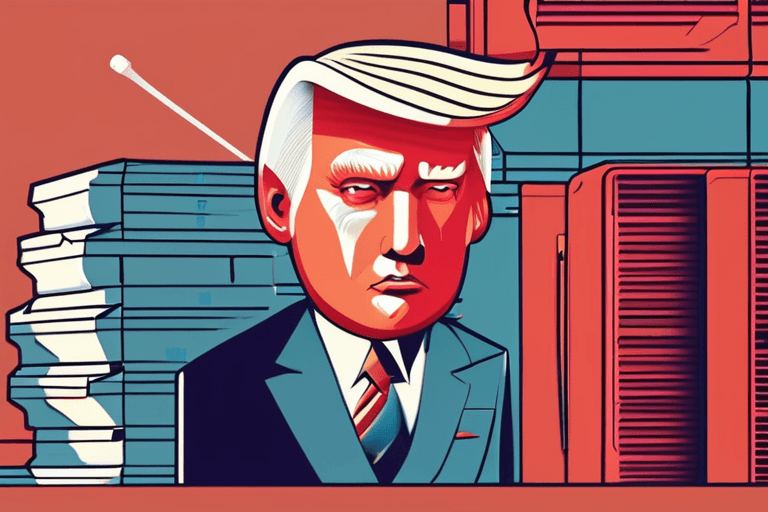
In the closing weeks of 2025, the United States witnessed a significant escalation in the debate over artificial intelligence regulation, culminating in President Donald Trump signing an executive order on December 11 aimed at preventing individual states from enacting their own AI laws. The move came after two failed attempts by Congress to pass legislation prohibiting state-level AI regulation. Trump's executive order pledged a collaborative effort with Congress to establish a national AI policy designed to be minimally burdensome, with the stated goal of ensuring the U.S. maintains a competitive edge in the global AI landscape.
The executive order was largely viewed as a win for major technology companies, which have invested heavily in lobbying against stringent AI regulations. These companies have argued that a fragmented regulatory environment across different states would impede innovation and hinder the development of AI technologies. The debate mirrors similar discussions taking place in other parts of the world, including the European Union, which is currently finalizing its AI Act, and China, which has already implemented regulations governing specific aspects of AI, such as algorithmic recommendations.
The coming year, 2026, is expected to see the battle over AI regulation shift to the U.S. court system. While some states may choose to comply with the federal government's directive, others are likely to challenge the executive order, citing public pressure to address concerns about the potential harms of AI, particularly regarding the safety of children interacting with chatbots and the environmental impact of energy-intensive data centers.
The debate is further fueled by significant financial contributions from opposing sides. Super PACs funded by tech industry leaders and those advocating for AI safety are expected to spend millions of dollars influencing congressional elections and shaping public opinion. This mirrors a global trend where discussions about AI ethics and governance are increasingly influenced by powerful corporate interests and advocacy groups.
The situation in the U.S. reflects a broader global struggle to balance the potential benefits of AI with the need to mitigate its risks. Different countries are adopting varying approaches, reflecting diverse cultural values and economic priorities. Some prioritize innovation and economic growth, while others emphasize ethical considerations and social responsibility. The outcome of the legal challenges and political maneuvering in the U.S. will likely have significant implications for the future of AI regulation both domestically and internationally, potentially influencing the approaches taken by other nations grappling with similar challenges.


















Discussion
Join the conversation
Be the first to comment