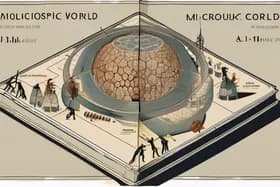
Historian Geertje Dekkers' biography, "Myriad, Microscopic and Marvellous," published by Reaktion in 2025, details the discoveries of microbiologist Antoni van Leeuwenhoek, including his 1674 observation of single-celled organisms. Van Leeuwenhoek, examining lake water under a microscope, documented bacteria and protozoa, according to Dekkers. The book also highlights his accurate descriptions of red blood cells, capillaries, striated muscle fibres, spermatozoa, and the crystalline lens of the eye.
Van Leeuwenhoek's contributions were highly valued by the scientific community. Upon his death in 1723, the UK Royal Society acknowledged the loss of its "most valuable correspondent," indicating the significance of his work to the field of early microbiology.
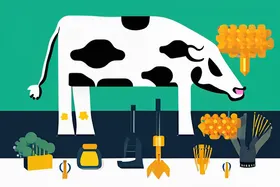
In "Naturekind," anthropologists Melissa Leach and James Fairhead explore the intersection of human culture and the natural world. Published by Princeton University Press in 2025, the book delves into biosemiotics, linking biological findings to the study of meaning in sign systems. Leach and Fairhead examine human interactions with various living entities, including chickens, horses, bees, bats, and plants, within diverse environments such as forests, seas, soils, and cities. The authors consider both living and non-living entities, emphasizing the interconnectedness of humans and the wider world.














Discussion
Join the conversation
Be the first to comment