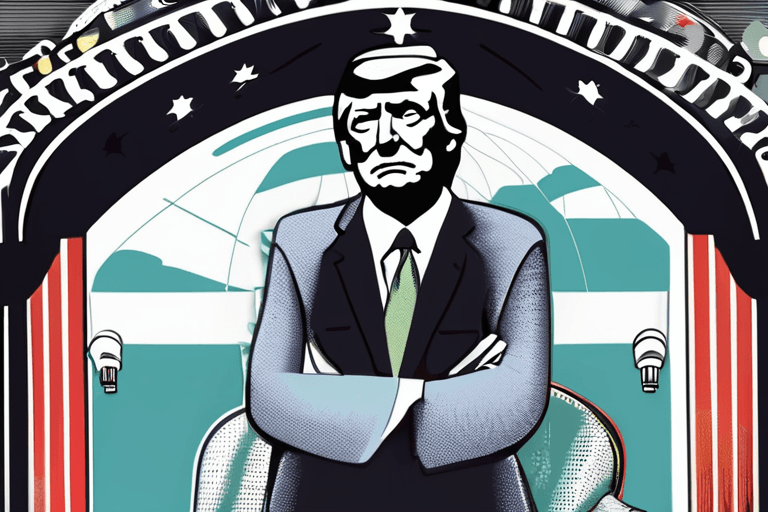
Donald Trump's newly launched global "board of peace" initiative suffered a setback Thursday as the former US president rescinded Canada's invitation to join the body. The move, announced via a Truth Social post directed at Canadian Prime Minister Mark Carney, casts a shadow over the initiative's potential impact on international markets and geopolitical stability.
The decision arrives as Trump seeks to establish the "board of peace" as a significant force in resolving global conflicts, claiming at the World Economic Forum in Davos that it would be "one of the most consequential bodies ever created." While specific financial commitments to the board remain undisclosed, the withdrawal of Canada, a G7 nation with a substantial economy, raises questions about the initiative's credibility and its ability to attract significant investment. Canada's GDP in 2023 was approximately $2.14 trillion USD, representing a considerable potential loss in terms of influence and resources for the board.
The withdrawal could have ripple effects across sectors reliant on stable international relations. Canadian businesses with global operations, particularly those in natural resources, manufacturing, and technology, depend on predictable geopolitical landscapes. The perceived instability created by this diplomatic rift could impact investor confidence and potentially lead to fluctuations in the Canadian dollar and related stock markets. Furthermore, the move may embolden other nations to reconsider their involvement, further diminishing the board's potential influence on global trade and investment flows.
Trump's "board of peace" aims to address global conflicts through a yet-to-be-defined framework. The initiative's success hinges on attracting participation from key global players and securing financial backing from governments and private sector entities. However, the withdrawal of Canada, particularly after Mark Carney, a respected figure in international finance, had reportedly accepted the invitation in principle, suggests challenges in building consensus and securing broad-based support.
Looking ahead, the future of the "board of peace" remains uncertain. The withdrawal of Canada underscores the difficulties in forging international partnerships, particularly when driven by potentially divisive political figures. The initiative's ability to attract credible participants and secure meaningful financial commitments will be crucial in determining its long-term viability and its potential impact on global markets and geopolitical stability. The incident highlights the increasing intersection of business, politics, and international relations, where diplomatic missteps can have tangible economic consequences.



















Discussion
Join the conversation
Be the first to comment