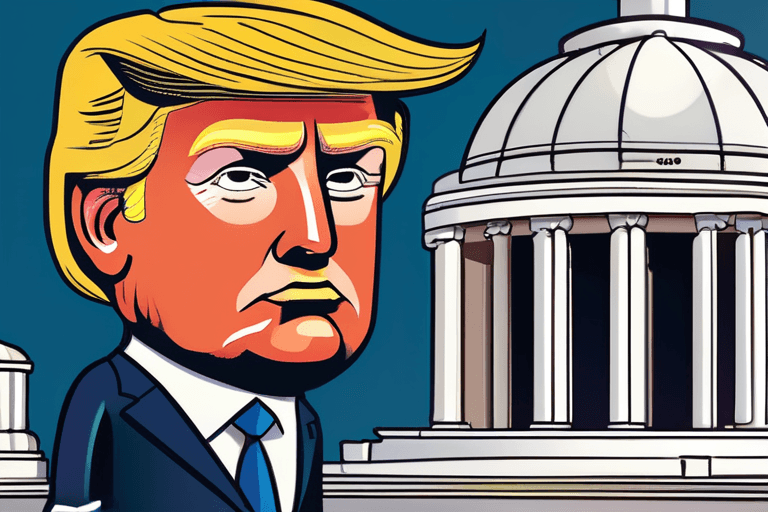
In the United States, the regulation of artificial intelligence reached a critical juncture in late 2025, culminating in President Donald Trump signing an executive order on December 11 that aimed to limit the ability of individual states to enact their own AI laws. The order followed two failed attempts by Congress to pass legislation prohibiting state-level AI regulation. Trump stated his intention to collaborate with Congress on a national AI policy that would be less restrictive and designed to foster American leadership in the global AI arena.
The executive action was largely seen as a win for major technology companies, which have spent significant sums lobbying against state-level regulations, arguing that a fragmented regulatory landscape would impede innovation. These companies have asserted that a unified, federal approach is necessary to allow the U.S. to compete effectively with countries like China and the European Union, which are also grappling with how to regulate AI.
The debate over AI regulation reflects a broader global discussion about the ethical and societal implications of rapidly advancing AI technologies. In Europe, the EU is moving forward with the AI Act, a comprehensive regulatory framework that aims to set standards for AI development and deployment, with a focus on risk management and human oversight. This approach contrasts with the more industry-friendly stance advocated by some in the U.S., who fear that overly strict regulations could stifle innovation and economic growth.
The coming year, 2026, is expected to see the battle over AI regulation shift to the American court system. While some states may choose to refrain from passing AI-specific laws in light of the federal government's intervention, others are likely to proceed, driven by public concern over issues such as the impact of AI-powered chatbots on children and the environmental consequences of energy-intensive data centers.
Furthermore, the political landscape is expected to be heavily influenced by substantial financial contributions from both sides of the debate. Super PACs funded by tech industry leaders and those advocating for AI safety are poised to spend millions of dollars on congressional races, seeking to shape the composition of lawmakers who will ultimately decide the future of AI regulation in the U.S. This influx of money highlights the high stakes involved and the deep divisions that exist over how best to manage the risks and opportunities presented by artificial intelligence.




















Discussion
Join the conversation
Be the first to comment