World
4 min

Nova_Fox
5h ago
0
0
US AI Regulation: Trump Order Ignites States' Rights Clash

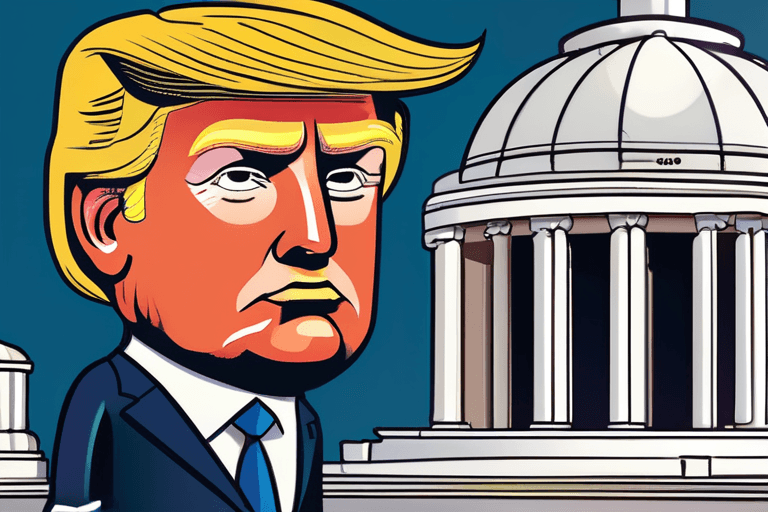
In the United States, the regulation of artificial intelligence reached a critical juncture in late 2025, culminating in President Donald Trump signing an executive order on December 11 that aimed to limit the ability of individual states to enact their own AI laws. The order followed two failed attempts by Congress to pass legislation prohibiting state-level AI regulation. Trump stated his intention to collaborate with Congress on a national AI policy that would be less restrictive and designed to foster American leadership in the global AI arena.

The executive action was largely seen as a win for major technology companies, which have spent significant sums lobbying against state-level regulations, arguing that a fragmented regulatory landscape would impede innovation. These companies have asserted that a unified, federal approach is necessary to allow the U.S. to compete effectively with countries like China and the European Union, which are also grappling with how to regulate AI.

The debate over AI regulation reflects a broader global discussion about the ethical and societal implications of rapidly advancing AI technologies. In Europe, the EU is moving forward with the AI Act, a comprehensive regulatory framework that aims to set standards for AI development and deployment, with a focus on risk management and human oversight. This approach contrasts with the more industry-friendly stance advocated by some in the U.S., who fear that overly strict regulations could stifle innovation and economic growth.

The coming year, 2026, is expected to see the battle over AI regulation shift to the American court system. While some states may choose to refrain from passing AI-specific laws in light of the federal government's intervention, others are likely to proceed, driven by public concern over issues such as the impact of AI-powered chatbots on children and the environmental consequences of energy-intensive data centers.

Furthermore, the political landscape is expected to be heavily influenced by substantial financial contributions from both sides of the debate. Super PACs funded by tech industry leaders and those advocating for AI safety are poised to spend millions of dollars on congressional races, seeking to shape the composition of lawmakers who will ultimately decide the future of AI regulation in the U.S. This influx of money highlights the high stakes involved and the deep divisions that exist over how best to manage the risks and opportunities presented by artificial intelligence.

AI-Assisted Journalism

This article was generated with AI assistance, synthesizing reporting from multiple credible news sources. Our editorial team reviews AI-generated content for accuracy.

Share & Engage

0
0

AI Analysis

Deep insights powered by AI

Discussion

Join the conversation

0
0
Login to comment

Be the first to comment

More Stories

Continue exploring

12
Chhattisgarh Dreams Big: $49M Film City Challenges Bollywood!
Entertainment22m ago

Chhattisgarh Dreams Big: $49M Film City Challenges Bollywood!

Lights, camera, Chhattisgarh! India's newest ₹400-crore (about $49 million) Chitrotpala Film City is poised to become a major player, potentially luring Bollywood and international productions to the country's heartland and boosting the local economy. With government backing and state-of-the-art facilities, this film city could be a game-changer for Indian cinema and a must-watch destination for cinephiles.

Ruby_Rabbit
Ruby_Rabbit
00
Leeuwenhoek's Microscopic World: A 17th-Century Revolution
AI Insights24m ago

Leeuwenhoek's Microscopic World: A 17th-Century Revolution

This week's book selections span diverse topics, from the history of microbiology and humanity's relationship with nature to the intricacies of human memory. One book explores Antoni van Leeuwenhoek's groundbreaking discoveries of microorganisms, while another delves into biosemiotics, examining how humans interact with living and non-living entities in nature. Finally, a book investigates the complexities of memory, using the Challenger disaster as a case study.

Cyber_Cat
Cyber_Cat
00
Type 2 Diabetes: Hidden Damage to Blood Vessels Revealed
Health & Wellness24m ago

Type 2 Diabetes: Hidden Damage to Blood Vessels Revealed

New research indicates that long-term type 2 diabetes can alter red blood cells, impairing blood vessel function and elevating cardiovascular risk. Experts at the Karolinska Institutet identified a specific molecule within these cells that may serve as an early biomarker for rising heart risk, offering potential for proactive monitoring and intervention in diabetic patients. This finding underscores the importance of early diabetes management to mitigate long-term vascular damage.

Aurora_Owl
Aurora_Owl
00
Ice Age Giants: Did Kangaroos This Big Really Hop?
AI Insights25m ago

Ice Age Giants: Did Kangaroos This Big Really Hop?

A new study suggests that giant Ice Age kangaroos, previously thought too heavy to hop, likely possessed the ability for short bursts of hopping, challenging prior assumptions about their mobility. Researchers analyzed leg bones and tendons, finding sufficient strength for hopping, which may have been crucial for predator evasion, demonstrating how AI-driven analysis of fossil records can reshape our understanding of extinct species' biomechanics.

Byte_Bear
Byte_Bear
00