The chill in the air felt different that week. It wasn't just the January bite, but a palpable frost settling over the relationship between two nations long considered inseparable. Border towns, once symbols of seamless connection, buzzed with an uneasy tension. Families who routinely crossed for work or leisure found themselves facing unexpected delays and heightened scrutiny. The week of January 20th, 2026, would become etched in the history books as the week the United States and Canada charted drastically different courses.
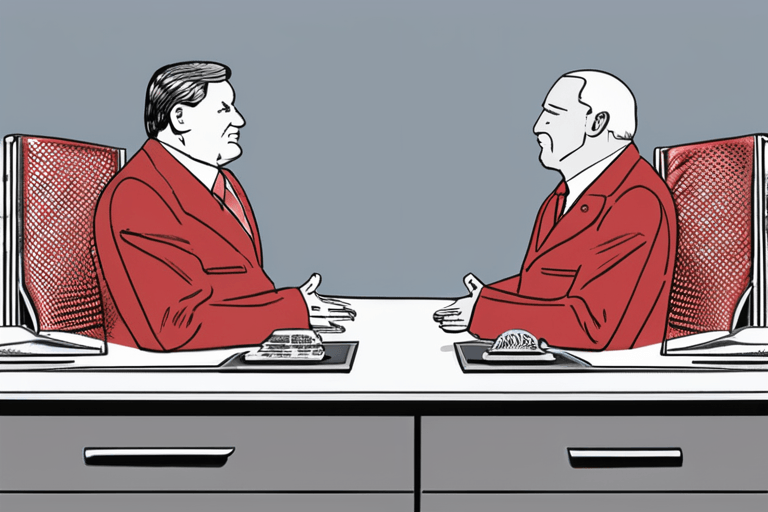
The catalyst for this seismic shift was a speech delivered by Canadian Prime Minister Mark Carney in Switzerland. The address, ostensibly about global economic stability, quickly morphed into a stark assessment of the United States' role on the world stage under President Donald Trump. Carney's central argument was that the US, under its current leadership, could no longer be relied upon to uphold the established international order. This wasn't a gentle nudge, but a forceful declaration of independence, a severing of ties that had been painstakingly woven over decades.
Carney's speech, as described by Vox staff editor Cameron Peters, was a "rupture, not a transition." He argued that the US's increasingly isolationist policies, its disregard for international agreements, and its unpredictable leadership style had left Canada with no choice but to forge its own path. The speech sent shockwaves through both nations, igniting fierce debate and prompting immediate reactions from political figures on both sides of the border.
President Trump responded swiftly and with characteristic bluntness. In a public address the following day, he dismissed Carney's concerns, stating, "Canada lives because of the United States. Remember that, Mark, the next time you decide to lecture us." This retort, far from calming the waters, only served to validate Carney's initial assessment and further inflame tensions.
The policy implications of this rift were immediately apparent. Trade negotiations, already strained, ground to a halt. Discussions on border security and environmental cooperation were suspended indefinitely. Canadian officials began exploring alternative trade partnerships with European and Asian nations, signaling a clear shift away from reliance on the US market.
"This isn't about personalities," explained Dr. Eleanor Vance, a professor of political science at the University of Toronto. "It's about fundamentally different visions for the future. Canada has always valued multilateralism and international cooperation, while the current US administration has prioritized unilateral action and a narrow definition of national interest. These differences were always there, but they have now become irreconcilable."
The impact extended beyond the political and economic spheres. Cultural exchanges, once commonplace, dwindled. Canadians and Americans alike expressed a sense of loss, a mourning for the close relationship that had defined their shared history. "My family has been crossing the border for generations," said Sarah Miller, a resident of Windsor, Ontario, who regularly visited Detroit for sporting events. "Now, it feels like there's a wall going up, not just physically, but emotionally."
Looking ahead, the future of US-Canada relations remains uncertain. While some hope for a return to normalcy after the Trump administration, others believe that the damage has been done, that the trust has been irrevocably broken. The week the US and Canada broke up served as a stark reminder that even the closest of alliances can crumble under the weight of political divergence and shifting global priorities. The path forward will require careful diplomacy, a willingness to compromise, and a renewed commitment to the values that once united these two nations. Whether such a reconciliation is possible remains to be seen.




















Discussion
Join the conversation
Be the first to comment