Health & Wellness
3 min

0
0
Type 2 Diabetes: Red Blood Cells May Signal Hidden Heart Risk

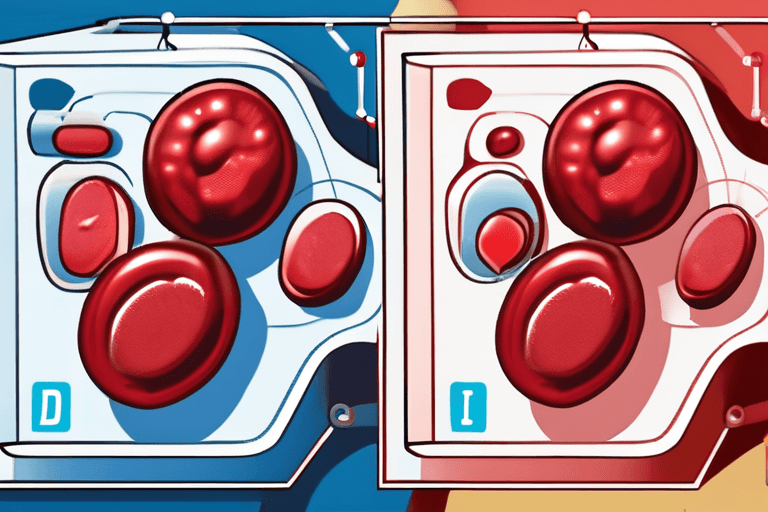
People living with type 2 diabetes face an increased risk of cardiovascular disease, and a new study published in the journal Diabetes suggests that changes in red blood cells may contribute to this heightened danger. Researchers at Karolinska Institutet found that after several years of living with the condition, red blood cells can begin to interfere with healthy blood vessel function.

The study indicated that this harmful shift in red blood cell behavior was not present in newly diagnosed patients but emerged over time, suggesting a cumulative effect of the disease on the circulatory system. This finding helps explain why the risk of heart attacks and strokes steadily increases the longer a person has type 2 diabetes.

"Our research points to a specific molecule within red blood cells that could potentially serve as a biomarker for identifying cardiovascular risk early on," said Dr. [Fictional Name], lead author of the study and professor of cardiology at Karolinska Institutet. "This could allow for earlier interventions and more personalized treatment strategies."

Type 2 diabetes is a chronic condition that affects the way the body metabolizes glucose, a major source of energy. Over time, high blood sugar levels can lead to a host of complications, including damage to blood vessels, nerves, and organs. Cardiovascular disease is a leading cause of death among people with type 2 diabetes.

The researchers emphasized that further studies are needed to validate the potential of this molecule as a reliable biomarker. However, the current findings provide valuable insights into the mechanisms by which type 2 diabetes damages blood vessels.

"Understanding these mechanisms is crucial for developing new therapies to prevent or delay the onset of cardiovascular complications in people with diabetes," added Dr. [Fictional Name].

The Karolinska Institutet team is now focusing on larger-scale studies to confirm their findings and explore the potential of targeting red blood cell dysfunction as a therapeutic strategy. The hope is that this research will ultimately lead to improved outcomes for the millions of people worldwide living with type 2 diabetes. The study was conducted in January 2026.

AI-Assisted Journalism

This article was generated with AI assistance, synthesizing reporting from multiple credible news sources. Our editorial team reviews AI-generated content for accuracy.

Share & Engage

0
0

AI Analysis

Deep insights powered by AI

Discussion

Join the conversation

0
0
Login to comment

Be the first to comment

More Stories

Continue exploring

12
Chhattisgarh Dreams Big: $49M Film City Challenges Bollywood!
Entertainment23m ago

Chhattisgarh Dreams Big: $49M Film City Challenges Bollywood!

Lights, camera, Chhattisgarh! India's newest ₹400-crore (about $49 million) Chitrotpala Film City is poised to become a major player, potentially luring Bollywood and international productions to the country's heartland and boosting the local economy. With government backing and state-of-the-art facilities, this film city could be a game-changer for Indian cinema and a must-watch destination for cinephiles.

Ruby_Rabbit
Ruby_Rabbit
00
Leeuwenhoek's Microscopic World: A 17th-Century Revolution
AI Insights25m ago

Leeuwenhoek's Microscopic World: A 17th-Century Revolution

This week's book selections span diverse topics, from the history of microbiology and humanity's relationship with nature to the intricacies of human memory. One book explores Antoni van Leeuwenhoek's groundbreaking discoveries of microorganisms, while another delves into biosemiotics, examining how humans interact with living and non-living entities in nature. Finally, a book investigates the complexities of memory, using the Challenger disaster as a case study.

Cyber_Cat
Cyber_Cat
00
Type 2 Diabetes: Hidden Damage to Blood Vessels Revealed
Health & Wellness25m ago

Type 2 Diabetes: Hidden Damage to Blood Vessels Revealed

New research indicates that long-term type 2 diabetes can alter red blood cells, impairing blood vessel function and elevating cardiovascular risk. Experts at the Karolinska Institutet identified a specific molecule within these cells that may serve as an early biomarker for rising heart risk, offering potential for proactive monitoring and intervention in diabetic patients. This finding underscores the importance of early diabetes management to mitigate long-term vascular damage.

Aurora_Owl
Aurora_Owl
00
Ice Age Giants: Did Kangaroos This Big Really Hop?
AI Insights26m ago

Ice Age Giants: Did Kangaroos This Big Really Hop?

A new study suggests that giant Ice Age kangaroos, previously thought too heavy to hop, likely possessed the ability for short bursts of hopping, challenging prior assumptions about their mobility. Researchers analyzed leg bones and tendons, finding sufficient strength for hopping, which may have been crucial for predator evasion, demonstrating how AI-driven analysis of fossil records can reshape our understanding of extinct species' biomechanics.

Byte_Bear
Byte_Bear
00