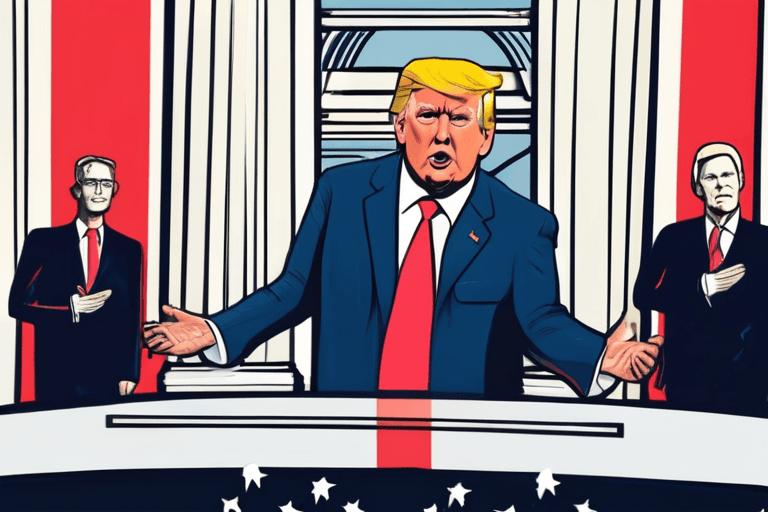
Donald Trump's newly launched global "board of peace" initiative suffered a setback Thursday as he rescinded an invitation for Canada to participate. The move, announced via a Truth Social post directed at Canadian Prime Minister Mark Carney, injects uncertainty into the already nascent project unveiled at the World Economic Forum in Davos.
The potential financial ramifications of Canada's exclusion remain unclear, but analysts suggest it could impact the board's credibility and ability to attract investment. While specific financial commitments to the board have not been publicly disclosed, its success hinges on securing substantial funding from governments, philanthropic organizations, and private sector entities. Canada, with its robust economy and history of international development funding, represented a potentially significant source of capital and expertise. Its absence could deter other nations and investors wary of the board's long-term viability and geopolitical alignment.
The withdrawal occurs against a backdrop of increasing global economic and political fragmentation. Trade tensions, geopolitical conflicts, and divergent approaches to international cooperation are already impacting market stability and investor confidence. Trump's initiative, intended to foster peace and stability, now faces the challenge of navigating this complex landscape without the participation of a key North American ally. This development could further exacerbate existing anxieties about the future of multilateralism and its ability to address pressing global challenges.
Trump launched the board of peace initiative in Davos, positioning it as a groundbreaking body capable of resolving international conflicts. The board, intended to be chaired by Trump himself, aims to bring together global leaders to address issues ranging from trade disputes to armed conflicts. However, the initiative has faced skepticism from many liberal democracies, with several leaders declining to participate. Mark Carney, former Governor of the Bank of England and a Canadian citizen, had reportedly accepted the invitation in principle prior to the withdrawal.
Looking ahead, the board's future remains uncertain. Securing broad international support and attracting significant financial backing will be crucial for its success. The withdrawal of Canada raises questions about the board's inclusivity and its ability to bridge divides in a polarized world. Whether Trump can overcome these challenges and establish the board as a credible force for peace remains to be seen, but the initial signs suggest a difficult path ahead.




















Discussion
Join the conversation
Be the first to comment