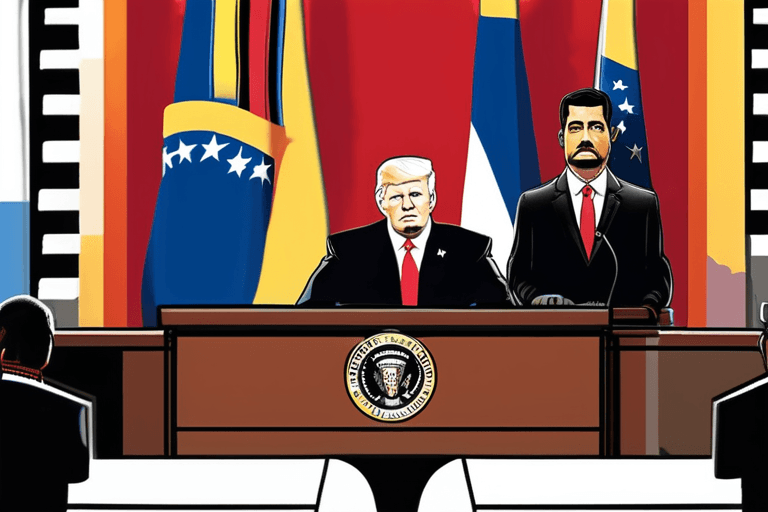
Donald Trump is scheduled to host María Corina Machado, the Venezuelan opposition leader and 2025 Nobel Peace Prize winner, at the White House on Thursday to discuss the future of Venezuela following the U.S. capture of Nicolás Maduro. The meeting comes after an elite U.S. military team seized Maduro in a pre-dawn raid on January 3 and transported him to a New York City jail.
The talks are considered high-stakes, given the complex political landscape in Venezuela and the unexpected U.S. approach to the power vacuum created by Maduro's removal. Many observers, both within Venezuela and internationally, had anticipated Machado would assume a leadership role after Maduro's capture. However, the White House has largely sidelined her, recognizing Maduro's former vice-president, Delcy Rodríguez, as Venezuela's interim leader, even as Trump maintains the U.S. will oversee the country's transition.
Venezuela, a nation rich in oil reserves, has been mired in political and economic turmoil for years. Maduro's presidency was marked by accusations of authoritarianism, human rights abuses, and economic mismanagement, leading to widespread shortages of food and medicine and the exodus of millions of Venezuelans seeking refuge in neighboring countries and beyond. Machado, a prominent figure in the Venezuelan opposition movement for over a decade, has consistently advocated for democratic reforms and a change in government. Her Nobel Peace Prize recognized her tireless efforts to promote peaceful solutions to the country's crisis.
The U.S. decision to recognize Rodríguez as interim leader has drawn criticism from some quarters, raising questions about the legitimacy of the process and the potential for continued instability. The move also appears to contradict Washington's previous stance of supporting Machado and other opposition figures as the legitimate representatives of the Venezuelan people.
Adding another layer to the diplomatic activity, Félix Plasencia, Venezuela's ambassador to the UK and a close ally of Rodríguez, is also expected to arrive in Washington on Thursday for meetings. The agenda for Plasencia's visit remains unclear, but it is likely to involve discussions on the transition process and the future of U.S.-Venezuelan relations. The simultaneous presence of Machado and a representative of the interim government in Washington suggests a complex and potentially fraught negotiation process ahead, with the future of Venezuela hanging in the balance. The international community is watching closely, with concerns about the potential for further instability in the region and the humanitarian implications for the Venezuelan people.
















Discussion
Join the conversation
Be the first to comment