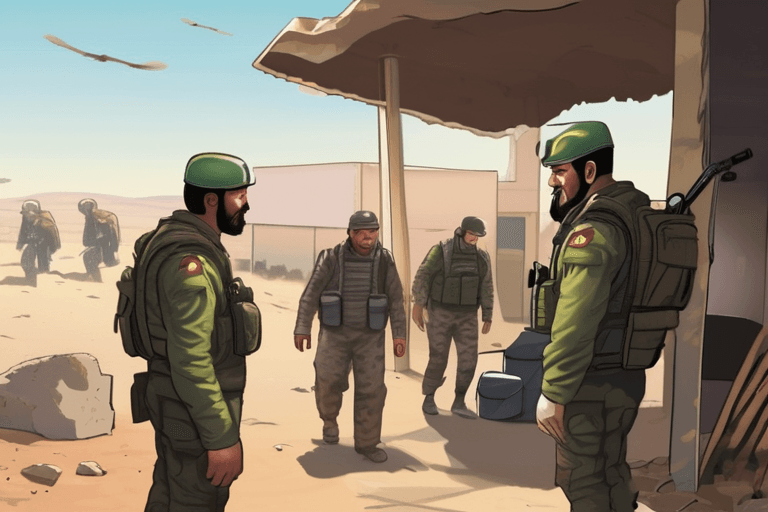
President Ahmed al-Sharaa of Syria secured numerous concessions in a deal reached Sunday with the Kurdish-led militia that previously controlled much of the country's northeast. However, the agreement's stability was immediately challenged by renewed violence in the region, presenting a significant test for al-Sharaa's government as it seeks to consolidate control.
The recent unrest underscores the complexities of al-Sharaa's efforts to reunify Syria after nearly 14 years of civil war. For the past year, al-Sharaa's government engaged in extensive negotiations with Kurdish leaders regarding their integration into the government. The Kurds entered negotiations holding considerable leverage, including long-standing support from the United States and control over key gas and oil fields. These talks were viewed by many Syrians as a bellwether for broader issues of minority inclusion and power-sharing within the government.
The central questions revolved around the extent to which al-Sharaa would decentralize power and the duration he would commit to negotiations with various groups. The agreement reached on Sunday seemingly addressed some of these concerns, at least on paper. However, the eruption of violence casts doubt on the practical implementation of the deal and the willingness of all parties to adhere to its terms.
The Syrian civil war, which began in 2011, has fractured the country along multiple lines, pitting the government against various rebel groups, including Kurdish militias. The conflict has drawn in numerous international actors, further complicating the situation. The United States, for example, has supported the Kurds in their fight against ISIS, while other countries have backed different factions.
The current situation remains fluid, and the future of the agreement between al-Sharaa's government and the Kurds is uncertain. The government faces the challenge of restoring order in the northeast while simultaneously addressing the underlying political and economic grievances that fueled the conflict. The coming weeks will be critical in determining whether the deal can hold and whether Syria can move towards a more stable and inclusive future.


















Discussion
Join the conversation
Be the first to comment