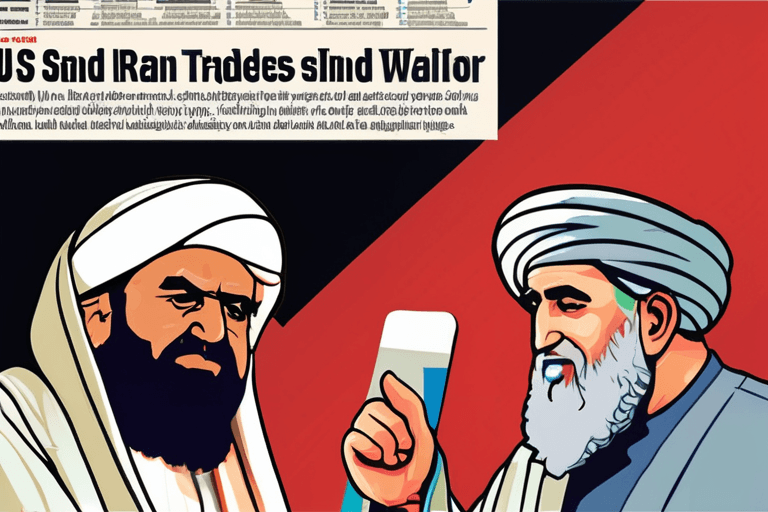
Iranian Foreign Minister Abbas Araghchi warned the United States of a potentially devastating response should Tehran face renewed aggression, a day after U.S. President Donald Trump issued fresh threats against the Islamic Republic. Araghchi's warning was articulated in an opinion piece published Tuesday in The Wall Street Journal.
Araghchi stated that Iran's armed forces would retaliate with full force if attacked again. "Our powerful armed forces have no qualms about firing back with everything we have if we come under renewed attack," he wrote, referencing the 12-day war launched by Israel on Iran in June of the previous year. He characterized this statement not as a threat, but as a necessary clarification given his diplomatic role.
The exchange of warnings underscores the persistently strained relations between Washington and Tehran, rooted in historical grievances and diverging geopolitical interests. The U.S. withdrew from the 2015 Iran nuclear deal, formally known as the Joint Comprehensive Plan of Action (JCPOA), in 2018 under President Trump, reimposing sanctions that have crippled Iran's economy. Iran has consistently maintained that its nuclear program is for peaceful purposes, a claim disputed by the U.S. and its allies.
The regional dynamics are further complicated by the involvement of various international actors. Russia and China, both signatories to the JCPOA, have expressed their opposition to the U.S.'s unilateral sanctions and have sought to maintain economic ties with Iran. European nations, while critical of Iran's human rights record and ballistic missile program, have also attempted to salvage the nuclear agreement.
The potential for escalation remains a significant concern for the international community. A full-scale conflict between the U.S. and Iran could destabilize the Middle East, a region already grappling with multiple conflicts and humanitarian crises, and have far-reaching consequences for global security and energy markets. Diplomatic efforts to de-escalate tensions and find a pathway back to negotiations are ongoing, but face significant challenges amid deep-seated mistrust and competing strategic objectives.





















Discussion
Join the conversation
Be the first to comment