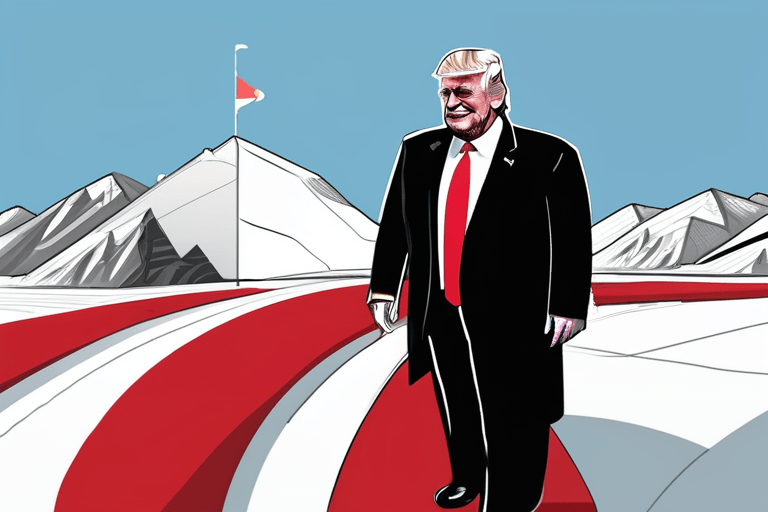
Transatlantic tensions escalated this week as President Donald Trump reaffirmed his interest in acquiring Greenland, a self-governing island within the Kingdom of Denmark, and threatened increased trade tariffs for European nations opposing the acquisition. The move has prompted the European Union to consider retaliatory measures, raising questions about Europe's long-standing dependence on the United States in areas ranging from energy and defense to overall economic stability.
Trump announced his intentions via social media following a phone call with NATO Secretary-General Mark Rutte on Tuesday, stating "there is no going back on Washington's plans." He further indicated he would address the matter with relevant parties at the World Economic Forum (WEF) in Davos, Switzerland, this week. The threat of increased tariffs, levied against European countries objecting to the Greenland purchase, has triggered internal discussions within the EU regarding a potential response. Some member states are advocating for the implementation of the bloc's "trade bazooka," a never-before-used option involving retaliatory tariffs and trade restrictions.
The situation highlights the complex relationship between Europe and the United States, particularly concerning energy security, defense commitments, and economic interdependence. For decades, Europe has relied on the U.S. for military protection under the NATO umbrella, a dependence that has arguably deepened in recent years. Similarly, European economies have benefited from trade relationships with the U.S., although these relationships have been strained under the Trump administration's "America First" policies. The potential acquisition of Greenland, rich in natural resources, adds another layer of complexity, particularly concerning energy independence for Europe.
Experts suggest that Europe's ability to break with the U.S. hinges on its capacity to diversify its energy sources, strengthen its own defense capabilities, and foster greater economic autonomy. This could involve increased investment in renewable energy, closer collaboration on defense initiatives within the EU framework, and the pursuit of alternative trade agreements with countries outside the U.S. sphere of influence. The EU's consideration of retaliatory tariffs signals a willingness to challenge U.S. policies, but the long-term implications of such a move remain uncertain.
The EU is currently weighing its options, with discussions ongoing among member states regarding the appropriate response to Trump's tariff threats. The outcome of these discussions, and the subsequent actions taken by both the EU and the U.S., will likely shape the future of transatlantic relations and determine the extent to which Europe can assert its independence from Washington. The meetings at the World Economic Forum in Davos this week are expected to provide further clarity on the positions of all parties involved.




















Discussion
Join the conversation
Be the first to comment