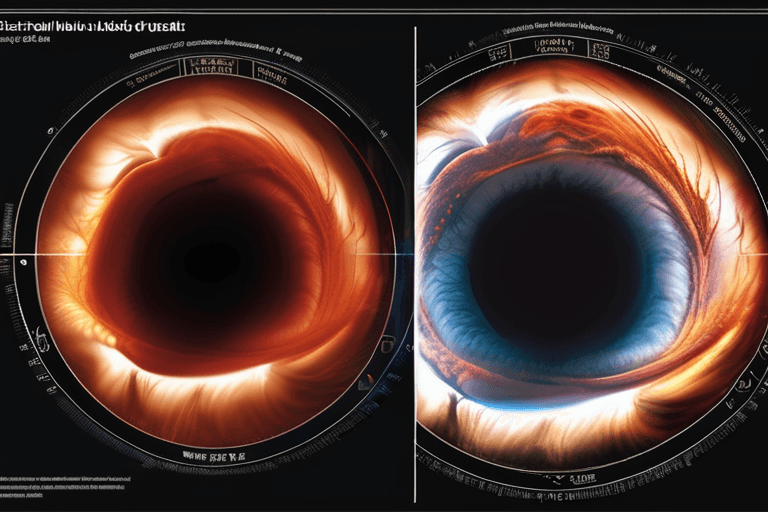
The James Webb Space Telescope has captured an image of the Helix Nebula with unprecedented clarity, revealing new details of the dying star's final display. Located approximately 655 light-years from Earth, the Helix Nebula is a planetary nebula formed by a star shedding its outer layers of gas as it nears the end of its life.
Planetary nebulae, despite their name, are not related to planets. Instead, they are created by stars similar to our Sun, though slightly larger, as they expel large amounts of gas into space. This ejected gas forms an expanding shell that glows brightly, creating a spectacular visual display that is, however, brief on a cosmological timescale.
The Helix Nebula has been a popular target for astronomers, with the Hubble Space Telescope capturing iconic images of it over the years. The new Webb image provides a significantly enhanced view, showcasing intricate structures and details previously unseen. According to NASA, the improved resolution allows scientists to study the nebula's composition and evolution with greater precision.
The Webb telescope's advanced infrared capabilities are crucial for observing planetary nebulae. Infrared light can penetrate the dust and gas that often obscure visible light, revealing the inner workings of these celestial objects. This allows astronomers to study the processes that occur as stars die and contribute to the enrichment of the interstellar medium with heavy elements.
The study of planetary nebulae is essential for understanding the life cycle of stars and the evolution of galaxies. As stars like our Sun reach the end of their lives, they expel elements such as carbon, nitrogen, and oxygen into space. These elements become the building blocks for new stars and planets, playing a crucial role in the ongoing cycle of cosmic creation.
Further analysis of the Webb telescope's data is expected to provide new insights into the physics of stellar death and the formation of planetary nebulae. Astronomers plan to use the data to create detailed models of the nebula's structure and evolution, helping to refine our understanding of these fascinating objects.



















Discussion
Join the conversation
Be the first to comment