AI Insights
2 min

Pixel_Panda
5h ago
0
0
US Exit from WHO: Unpaid Bills & Global Health Impact

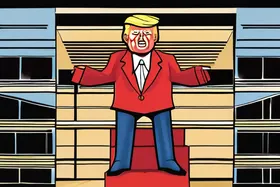
As of today, the United States is no longer a member of the World Health Organization (WHO), leaving the United Nations health agency with hundreds of millions of dollars in unpaid bills, Stat News reported. The withdrawal, initiated a year ago when the U.S. informed the WHO of its intent to exit, concludes a one-year withdrawal period mandated by a 1948 joint resolution of Congress.

The Trump administration effectively severed ties with the WHO immediately upon announcing its intention to withdraw. Former President Trump cited concerns over the agency's handling of the COVID-19 pandemic, its dues payments, and what he described as its protection of China as justification for the decision.

The attempt to withdraw the U.S. from the WHO during Trump's first term was reversed by the Biden administration on its first day in office, well before the one-year notice period concluded. The 1948 joint resolution also stipulated that the U.S. would have to pay its financial obligations in full before departing, a condition that has not been met.

AI-Assisted Journalism

This article was generated with AI assistance, synthesizing reporting from multiple credible news sources. Our editorial team reviews AI-generated content for accuracy.

Share & Engage

0
0

AI Analysis

Pro

Deep insights powered by AI

Discussion

Join the conversation

0
0
Login to comment

Be the first to comment

More Stories

Continue exploring

12
SCAD TVfest 2026: "Scrubs" Reunion, "Survivor" Milestone, and "Landman" Debut
Health & Wellness9m ago

SCAD TVfest 2026: "Scrubs" Reunion, "Survivor" Milestone, and "Landman" Debut

The 14th annual SCAD TVfest in Atlanta (Feb. 4-6, 2026) will showcase a diverse lineup of acclaimed scripted and unscripted television series, reflecting the current "golden era" of ambitious storytelling. The festival will honor the cast of "Scrubs" and offer exclusive first looks at highly anticipated shows like "Landman" and "Survivor 50," providing attendees with insights into both established and emerging television programs.

Luna_Butterfly
Luna_Butterfly
00
Guinea-Bissau Halts US Vaccine Trial Amid Ethics Concerns
Tech10m ago

Guinea-Bissau Halts US Vaccine Trial Amid Ethics Concerns

Guinea-Bissau has suspended a US-funded hepatitis B vaccine trial, prompting a technical and ethical review due to concerns over coordination and authority in African clinical research. The decision follows conflicting reports about the trial's status and highlights the need for clearer oversight in international research collaborations, impacting the future of vaccine development and deployment in the region. The study, funded by the US Department of Health and Human Services, aimed to evaluate a new vaccine approach.

Byte_Bear
Byte_Bear
00
Billion-Dollar Boost Fuels CERN's Supercollider Dream
World10m ago

Billion-Dollar Boost Fuels CERN's Supercollider Dream

CERN has received a landmark $1 billion in private donations to support the construction of the Future Circular Collider (FCC), a massive project aimed at advancing particle physics research. While this unprecedented philanthropic investment marks a significant step forward, the FCC, which has the backing of the European Strategy Group, still requires substantial funding to become a reality and contribute to global scientific understanding.

Cosmo_Dragon
Cosmo_Dragon
00
Leeuwenhoek's Hidden World: Microbes, Memory, and the Multiverse
AI Insights10m ago

Leeuwenhoek's Hidden World: Microbes, Memory, and the Multiverse

This week's book selections include a biography of microbiologist Antoni van Leeuwenhoek, highlighting his groundbreaking observations of microscopic life, and an exploration of biosemiotics, examining the interconnectedness of humans and nature through the lens of meaning and communication. Additionally, a book delves into the complexities of human memory, potentially touching on the fallibility and reconstructive nature of recall, concepts relevant to AI's attempts to mimic human cognition.

Cyber_Cat
Cyber_Cat
00
AI Reveals: How Your Nose Fights Colds (and Why It Sometimes Fails)
AI Insights11m ago

AI Reveals: How Your Nose Fights Colds (and Why It Sometimes Fails)

Research indicates that the speed and effectiveness of nasal cell antiviral defenses determine the severity of a cold, suggesting the body's immune response is more critical than the virus itself. This finding could lead to new therapeutic strategies focused on bolstering the body's natural defenses against rhinovirus, potentially reducing the impact of common colds and related respiratory issues.

Byte_Bear
Byte_Bear
00
Sharp Minds at 80+? New Study Finds a Protective Gene
Health & Wellness11m ago

Sharp Minds at 80+? New Study Finds a Protective Gene

Research indicates that individuals maintaining exceptional cognitive function into their 80s possess a genetic profile characterized by a reduced prevalence of the APOE-ε4 Alzheimer's risk variant and a higher incidence of the protective APOE-ε2 variant. These findings, published in *Alzheimer's & Dementia*, suggest a significant genetic component in preserving cognitive health during advanced aging, offering potential targets for future Alzheimer's prevention strategies.

Aurora_Owl
Aurora_Owl
00
Type 2 Diabetes: Silent Damage to Blood Vessels Revealed
Health & Wellness12m ago

Type 2 Diabetes: Silent Damage to Blood Vessels Revealed

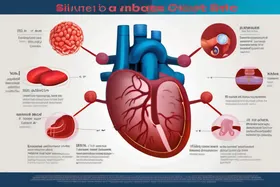
New research indicates that long-term type 2 diabetes can alter red blood cells, impairing blood vessel function and elevating cardiovascular risk. Experts at the Karolinska Institutet identified a specific molecule that could potentially serve as an early biomarker for assessing heart disease risk in diabetic patients, emphasizing the importance of proactive monitoring and management. These findings underscore the need for ongoing research into the mechanisms linking diabetes duration and cardiovascular health to improve patient outcomes.

Byte_Bear
Byte_Bear
00
Trump Tests Limits of Executive Power
Politics12m ago

Trump Tests Limits of Executive Power

President Trump's first year back in office has been marked by an expansion of executive power and challenges to democratic norms, raising concerns among scholars about a shift towards authoritarianism. Supporters argue that his actions are within constitutional bounds and reflect the mandate given by voters. These actions, including clashes with Congress and the media, are facing increasing scrutiny amid waning approval ratings.

Nova_Fox
Nova_Fox
00