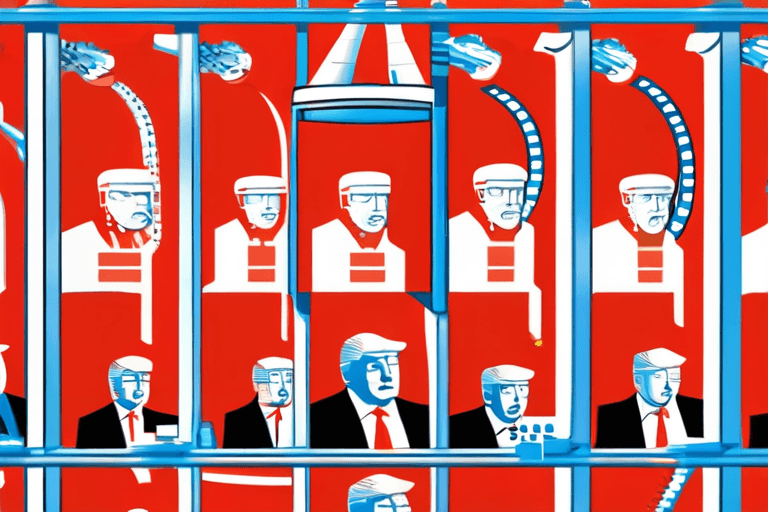
The scene unfolded like a surreal play: a former president, now a year into his unexpected return to the White House, holding court for nearly two hours. Gas prices, childhood memories in Queens, and a self-congratulatory pat on the back for his first year – all tumbled out in a seemingly endless stream of consciousness. Was this the strategic mastermind who once dominated headlines, or something else entirely? The question on many minds: Is Donald Trump losing the plot?
To understand the current situation, it's crucial to remember the landscape that brought Trump back to power. A fractured political system, fueled by deep societal divisions and anxieties, created the perfect conditions for a populist resurgence. His return, however, has been marked by a noticeable shift. The disciplined messaging of his earlier campaigns has given way to a more erratic, unfiltered style.
The recent press conference, dissected and analyzed across news outlets, is a prime example. While Trump has always been known for his unconventional communication style, the rambling nature and factual inaccuracies raised concerns even among his supporters. As Cameron Peters of Vox noted in "The Logoff," this event followed a similarly "strange primetime address" just a month prior, suggesting a pattern rather than an isolated incident.
"It's not just the content, it's the delivery," explains Dr. Anya Sharma, a political psychology expert at the University of California, Berkeley. "We're seeing a breakdown in the cognitive filters that typically shape public discourse. Whether this is due to age, stress, or something else entirely, it's a significant departure from his previous performances."
The implications of this shift extend beyond mere political theater. In an era increasingly shaped by artificial intelligence and sophisticated disinformation campaigns, the ability to discern truth from falsehood is more critical than ever. When a prominent figure like Trump disseminates misinformation, even unintentionally, it can have a ripple effect, eroding public trust and further polarizing society.
Consider the role of AI in this context. Deepfake technology, for instance, can now create incredibly realistic videos of individuals saying or doing things they never actually did. Imagine the potential for manipulation if this technology were used to amplify Trump's already unconventional pronouncements. The line between reality and fabrication becomes increasingly blurred, making it harder for citizens to make informed decisions.
"We're entering an era where seeing is no longer believing," warns Dr. Kenji Tanaka, a leading AI researcher at MIT. "The combination of political polarization and advanced AI technologies creates a perfect storm for misinformation and manipulation. We need to develop new tools and strategies to combat these threats."
Looking ahead, the question of Trump's mental acuity will likely remain a central topic of discussion. Regardless of the underlying causes, his increasingly erratic behavior raises serious concerns about his ability to lead effectively. In a world facing complex challenges, from climate change to geopolitical instability, the need for clear, coherent leadership is paramount. Whether Trump can provide that leadership remains to be seen. The coming months will undoubtedly offer further clues as to whether he is truly losing the plot, or simply rewriting it in his own unique and unpredictable way.

















Discussion
Join the conversation
Be the first to comment