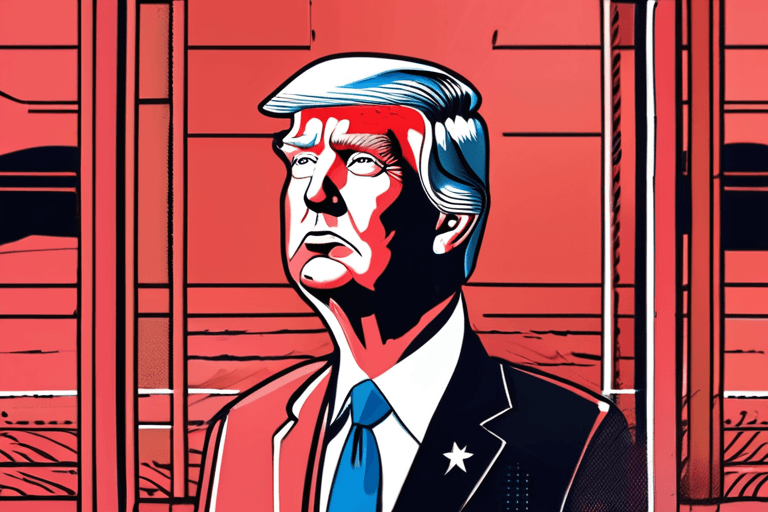
The scene unfolded like a surreal drama on the White House lawn. Donald Trump, a year into his second, unexpected term, stood before a gaggle of reporters, embarking on a near two-hour monologue that veered from self-congratulatory pronouncements on his record to meandering anecdotes about his youth in Queens. The press conference, as described by Vox’s Cameron Peters, was "rambling" and "dishonest," a performance that left many wondering: Is the 47th President of the United States losing his grip?
This isn't just a question about one man's mental state; it's a reflection of a broader societal unease amplified by the age of artificial intelligence. We live in a world increasingly shaped by algorithms that analyze, predict, and even mimic human behavior. As political figures navigate this complex landscape, the line between genuine leadership and AI-driven manipulation becomes increasingly blurred.
Trump's recent behavior, including the aforementioned press conference and a prior "shouty" primetime address, raises questions about the forces shaping his public persona. Is he simply being "unconstrained," as Peters suggests, or is something more complex at play? Could AI be influencing his messaging, either directly or indirectly?
The use of AI in political campaigns is nothing new. Algorithms have long been used to target voters with personalized ads, analyze sentiment on social media, and even predict election outcomes. However, the sophistication of these tools is rapidly advancing. AI can now generate realistic-sounding speeches, craft persuasive arguments tailored to specific audiences, and even detect vulnerabilities in an opponent's rhetoric.
"AI is becoming an indispensable tool for political campaigns," explains Dr. Anya Sharma, a professor of computational politics at MIT. "It allows campaigns to understand voters better, craft more effective messages, and respond to events in real-time. The ethical implications, however, are enormous."
One concern is the potential for AI to be used to spread misinformation or manipulate public opinion. Deepfakes, AI-generated videos that convincingly depict people saying or doing things they never did, are becoming increasingly sophisticated and difficult to detect. Imagine a deepfake video of a political opponent making a controversial statement going viral just days before an election. The damage could be irreparable.
Another concern is the potential for AI to exacerbate existing biases in the political system. Algorithms are trained on data, and if that data reflects existing biases, the algorithm will likely perpetuate those biases. This could lead to AI-powered campaigns that disproportionately target certain groups with negative or misleading information.
As Trump prepares to address world leaders in Davos, the question of his mental state and the potential influence of AI on his messaging remains a subject of intense debate. Whether he is simply "free-associating" or strategically deploying AI-driven tactics, the implications for global politics are profound.
The rise of AI in politics presents both opportunities and challenges. It has the potential to make campaigns more efficient and effective, but it also raises serious ethical concerns. As citizens, it is crucial to be aware of these issues and to demand transparency and accountability from our political leaders. The future of democracy may depend on it.
















Discussion
Join the conversation
Be the first to comment